




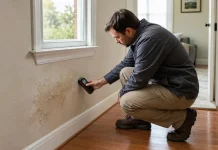
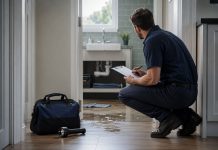

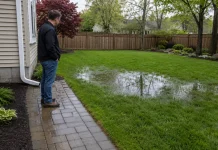
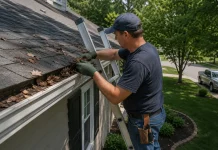








An emergency home repair is a problem that threatens safety, causes active damage, leaves the property insecure, or affects an essential service. Your first job is not to diagnose the fault. It is to protect people and stop the situation from getting worse.
Start by asking four questions:
- Is anyone in immediate danger?
- Is the damage active or spreading?
- Has an essential service or safe access failed?
- Can the source be isolated without entering danger?
Gas odors, carbon monoxide alarms, smoke, sparks, sewage, water near electricity, or visible structural movement require immediate action. Leave or restrict access when necessary, then contact emergency services, the relevant utility, or a qualified professional.
What Qualifies as an Emergency Home Repair?
An unexpected problem is not automatically an emergency. Urgency depends on the safety risk, how quickly the damage is spreading, where the problem is located, and how it affects the property.
A repair becomes an emergency when delaying action could:
- Put an occupant at risk
- Cause a fire or electric shock
- Allow water or sewage to spread
- Make the structure unsafe
- Leave the property unsecured
- Remove an essential service
- Prevent a safe entrance or exit
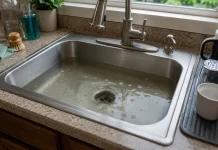
The same defect can have very different levels of urgency. A controlled drip into a dry sink may need prompt attention. Water moving toward a socket needs a much faster response.
How Is an Emergency Different From an Urgent Repair?
| Priority | What it means | Typical response |
|---|---|---|
| Immediate danger | Life, health, fire, gas, electrical, or structural safety may be threatened. | Leave or restrict access and contact emergency help. |
| Active emergency | Damage is spreading or an essential function has failed. | Isolate the source when safe and arrange immediate professional help. |
| Urgent repair | The defect may spread, recur, or become unsafe. | Stop using the affected component and arrange a prompt assessment. |
| Planned repair | The condition appears stable, with no active hazard. | Schedule the repair and monitor for changes. |
A stable problem moves up the scale when it starts spreading or reaches electricity. Sanitation, security, severe weather, and vulnerable occupants can also make a repair more urgent.
For broader service-based guidance on leaks, locks, power failures, and other everyday property problems, see How To Guides ActivePropertyCare.
What Should You Do First During a Home Repair Emergency?
Protect people before the property itself. Move everyone away from smoke, sparks, gas odors, contaminated water, unstable ceilings, or falling materials.
Leave the property or restrict access when you notice:
- A gas odor or carbon monoxide alarm
- Smoke, flames, or a strong burning smell
- Sparking or visibly damaged wiring
- Water touching electrical equipment
- Sewage across occupied flooring
- A sagging ceiling or unstable wall
- An unsafe entrance or exit
Do not stay in a dangerous area to collect possessions or take photographs. The CDC’s flooded-home safety guidance warns against creating sparks when gas may be present. It also advises people not to return until the property is safe.
Can You Turn Off the Water or Power?
A shutoff helps only when you can reach it safely and know how to operate it.
You may be able to isolate the main water supply when you know its location, the route is dry, and the valve moves normally. Power may sometimes be isolated from a breaker panel that is dry and safely accessible.
Never approach a panel through standing water. Do not touch wet switches, sockets, plugs, or appliances. If safe isolation is impossible, leave the area and tell the relevant professional that the source remains active.
Which Water Problems Require Emergency Home Repair?
Active water can travel well beyond the puddle you can see. It may enter flooring, cabinets, walls, insulation, or the room below.
Emergency help may be needed for:
- A burst pipe or flexible hose
- Water flowing through a ceiling
- A leaking water heater
- A toilet overflowing with wastewater
- Water entering around electrical fittings
- A supply leak that cannot be isolated
- Water spreading into another room
The amount of water is not the only concern. Its location can change the danger. A small leak near electricity may be riskier than a larger leak that is contained in a safe area.
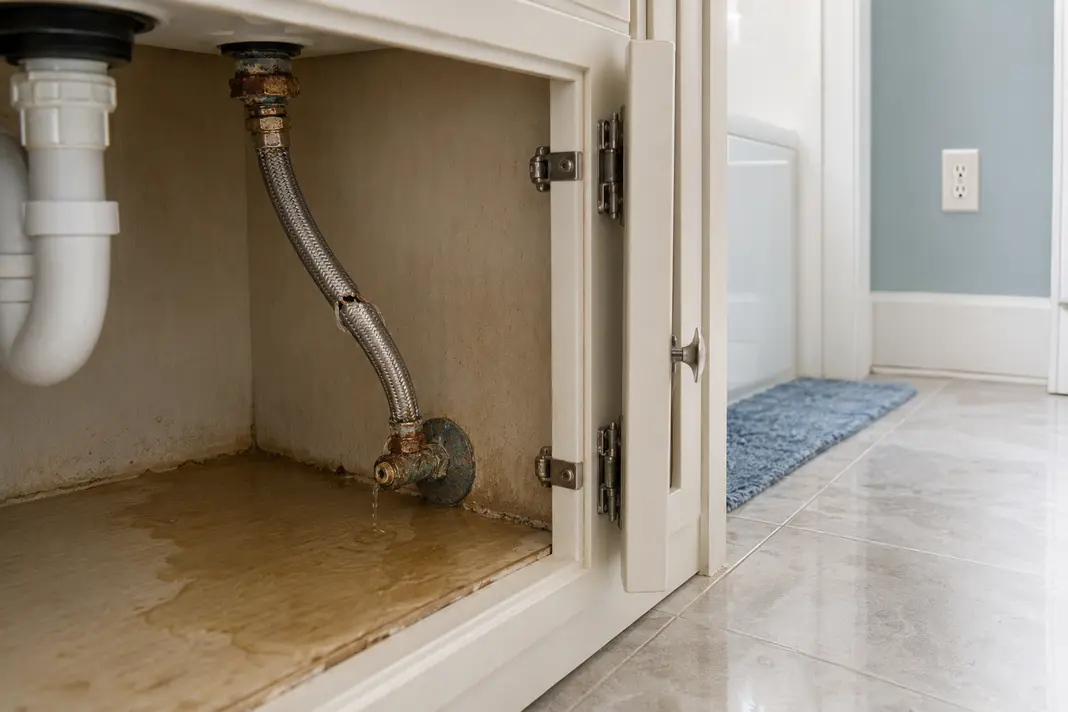
Water near electricity changes a plumbing leak into an immediate safety risk.
What Should Be Checked After the Water Stops?
Stopping the flow does not complete the repair. From a safe position, check adjacent flooring, skirting, cabinets, walls, the ceiling below, and nearby electrical fittings. The failed component and any related connectors also need a professional assessment.
The EPA explains that moisture control is central to mold control. Its mold and moisture guidance recommends drying water-damaged areas within 24 to 48 hours when it is safe to do so.
Use safe first checks for moisture after controlling the immediate danger. Hidden materials may still be wet after the visible surface looks dry.
Which Electrical and Gas Warning Signs Cannot Wait?
Electrical faults often give warning signs before a serious failure:
- Sparks from an outlet or switch
- A burning-plastic smell
- Hot outlet covers
- Buzzing or sizzling sounds
- Visible heat damage
- Repeated breaker trips
- Exposed wiring
- Water around electrical equipment
Do not open a panel or remove an outlet cover to look for the cause. Never keep resetting a breaker that repeatedly trips.
The CPSC’s electrical safety guidance identifies sparks, buzzing, overheating, burning odors, and frequent breaker trips as warning signs. A qualified electrician should assess the fault.
Do not operate a switch, use a phone inside, search for the leak, or attempt a temporary repair. Call the gas utility or emergency services from outside. A carbon monoxide alarm also requires immediate action because carbon monoxide has no reliable smell or visible warning.
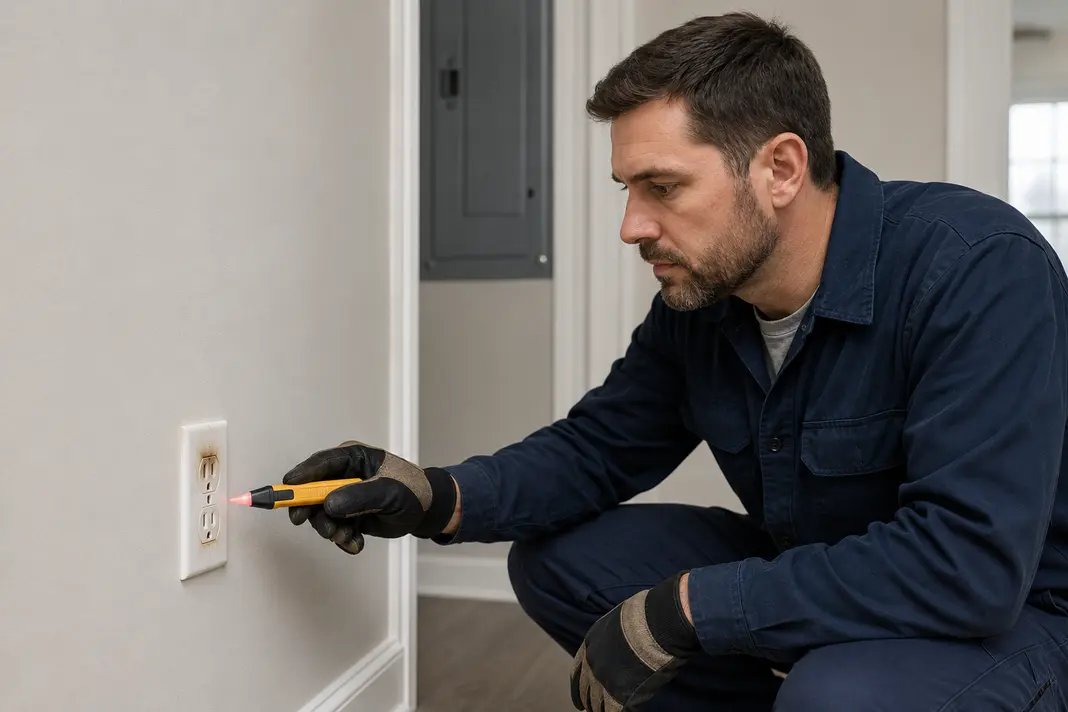
Heat, odor, buzzing, and repeated breaker trips require professional assessment.
When Are Structural or Roof Problems Emergencies?
Not every crack indicates structural failure. Sudden change, displacement, sagging, impact damage, and falling material are more concerning.
Keep people away and seek professional advice when you notice:
- A sagging or bulging ceiling
- A bowing wall
- A crack that suddenly widens
- A floor that drops or moves
- A shifted roof section
- Falling plaster, brick, or concrete
- New cracks combined with doors that suddenly bind
Do not stand beneath unstable material. Avoid entering a roof space when movement, water, or electrical damage may be present. A structural engineer or another appropriate building professional should assess suspected instability.
A roof leak becomes more urgent when water enters rapidly, reaches electrical fittings, or causes the ceiling to move. Do not climb onto a wet roof. A qualified roofer should inspect the external defect.
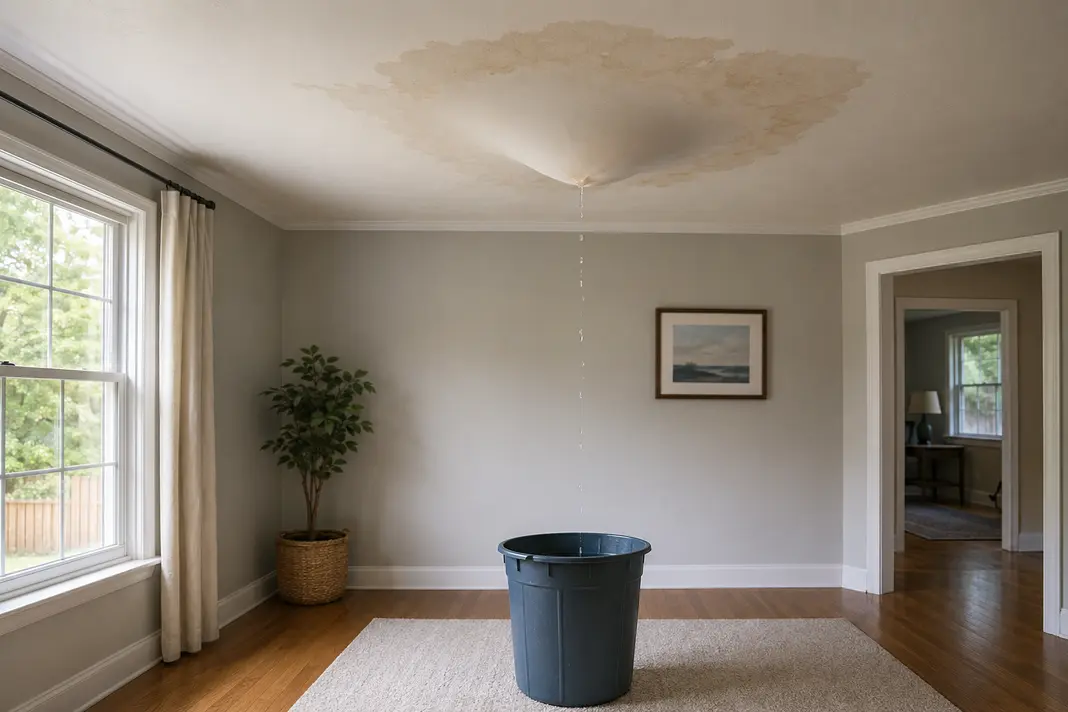
Keep people away from sagging ceilings, falling material, and rapidly spreading roof leaks.
When Do Drains, Heating, and Access Problems Become Emergencies?
Look for a wider backup
One slow drain is usually an urgent maintenance issue rather than an emergency. Several fixtures backing up at the same time may point to a wider blockage.
Stop using affected fixtures when wastewater enters the home, the only toilet becomes unusable, or sewage reaches occupied flooring. Keep children and pets away.
Use slow drain and blockage warning signs to work out whether one fixture or the wider drainage system is affected.
Consider temperature and vulnerability
A heating or cooling failure becomes more serious during extreme temperatures. The risk increases when children, older adults, or medically vulnerable occupants cannot remain safe. Smoke, gas odors, or carbon monoxide warnings require immediate evacuation.
Protect safe entry and exit
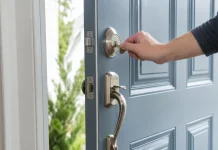
A failed internal latch may be inconvenient, while a failed external lock can leave the home unsecured. Contact a locksmith when an entrance cannot be secured. Call emergency services when someone is trapped or cannot leave safely.
What Should You Avoid During an Emergency Repair?
A rushed decision can turn one problem into two. Avoid anything that increases pressure, spreads contamination, or creates an electrical hazard.
- Do not force a seized valve.
- Do not keep using a leaking fixture.
- Do not reset a breaker repeatedly.
- Do not touch wet electrical equipment.
- Do not enter water near electricity.
- Do not search for a gas leak.
- Do not work beneath unstable materials.
- Do not climb onto a wet roof.
- Do not mix drain chemicals.
- Do not treat tape or silicone as a permanent repair.
It should never create a second hazard. Gas, electrical, structural, sewage, and unsafe roof work require the appropriate professional.
Who Should You Call First?
Choose the first contact according to the immediate hazard, not just the damaged material you can see.
| What you observe | Likely first contact |
|---|---|
| Fire, collapse, poisoning, or immediate danger | Local emergency services |
| Gas odor or suspected gas leak | Gas utility or emergency services |
| Sparks, overheating, or wet electrical equipment | Qualified electrician |
| Burst pipe or failed flexible hose | Licensed or appropriately qualified plumber |
| Active roof leak or damaged roof covering | Qualified roofer |
| Suspected structural instability | Structural engineer or building professional |
| Sewage backup or widespread drainage failure | Drainage or wastewater professional |
| Failed external lock or unsafe access | Qualified locksmith |
| Significant clean-water damage | Water-damage or restoration professional |
Some emergencies need more than one specialist. A burst hose near a socket, for example, may require both a plumber and an electrician.
What Can You Do While Professional Help Is Coming?
Only take steps that do not expose you to the hazard. Photograph damage from a safe distance so the professional can see what happened without anyone re-entering danger.
Give the professional a clear phone report:
“Water is running from the hose beneath the bathroom sink. It has entered the hall and is approaching a socket. The taps are no longer being used. The main water is off, and everyone is away from the area.”
Do not say that water, gas, or power is isolated unless you have confirmed it safely.
What Should Tenants and Landlords Record?
Describe what is happening now
Tenants should report the affected room, current problem, start time, rate of spread, safety risk, and lost service. Photographs taken from a safe place can provide useful context.
Keep the response traceable
Landlords should record the report time, instructions given, access arrangements, contractor contact, attendance, temporary safety measures, invoices, and follow-up checks.
A consistent process shows how to prioritize tenant repair requests without relying on vague descriptions such as “bad leak” or “urgent problem.” Local repair duties vary, so landlords should follow the rules that apply to their property and location.
How Can You Prevent Another Emergency Home Repair?
Check visible hoses
Look beneath sinks, toilets, washing machines, and appliances for rust, swelling, fraying, damp fittings, stains, soft cupboard material, or a persistent damp smell. Related hoses should be considered together because replacing one old connector may leave another weak point.
Know the shutoff locations
Know where the main water shutoff and electrical panel are located, and keep safe access clear. Do not wait for a burst pipe to discover that a valve is seized or inaccessible.
Store emergency contacts
Keep contact details for emergency services, utilities, qualified trades, the landlord, and the property insurer where occupants can find them quickly.
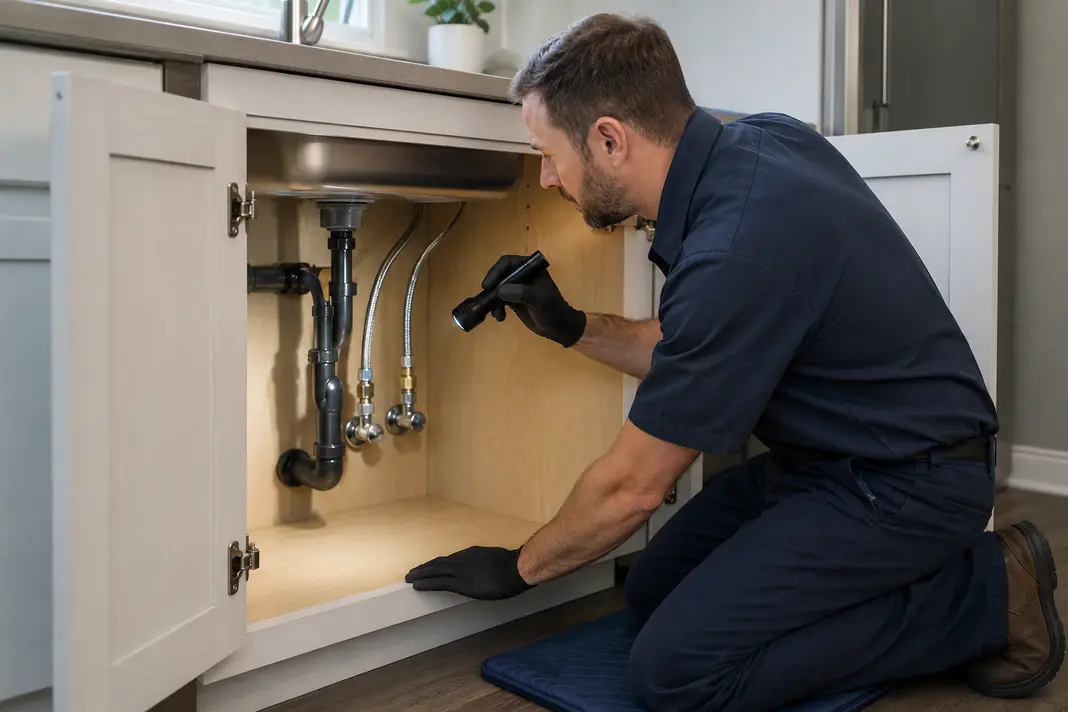
Routine checks can reveal damaged hoses, moisture, and inaccessible shutoffs before an emergency.
For a broader view of how repairs, safety checks, and routine maintenance fit together, see the ActivePropertyCare.com home care guidance.
The Right Next Step Protects More Than the Repair Area
Frequently Asked Questions
What qualifies as an emergency home repair?
A repair is an emergency when it threatens safety, causes active damage, affects an essential service, or leaves the property insecure.
Can an emergency home repair wait until morning?
Only when there is no immediate danger, active spread, security failure, or loss of an essential service. Seek professional advice if you cannot confirm this safely.
Is every water leak an emergency?
No. A controlled drip may allow prompt scheduled help. Active spread, contamination, ceiling movement, or proximity to electricity increases the urgency.
What should I do when water is near a socket?
Keep everyone away and do not touch electrical equipment. Isolate power only from a dry, safe location. Contact an electrician or emergency service.
Should I force a stuck water valve?
No. Excessive force may snap the valve or connected pipework. Use a safely accessible main shutoff and contact a plumber.
Can tape or silicone repair a burst flexible hose?
No. These materials do not return a failed pressure hose to dependable condition. Stop using the fixture and arrange a professional replacement.
Who should I call first?
Call according to the immediate hazard. Emergency services handle immediate danger, utilities handle supply hazards, and qualified trades handle the repair.
Is a slow drain an emergency?
One slow drain usually is not. Sewage entering the home, several fixtures backing up, or the loss of the only toilet requires faster action.
What should a tenant report?
Report the location, active problem, start time, rate of spread, safety risk, lost service, and whether safe access is available.
Will homeowners insurance cover the repair?
Coverage depends on the policy and the cause of the damage. Document the condition, actions, invoices, and communications before asking the insurer for a decision.

