



















Yard drainage is easier to understand when you watch where water starts, how it travels, where it slows, and whether it has a safe exit. A dry-weather puddle mark shows the result. Rainfall observation reveals the route.
Stay on firm ground and observe from a safe position. Do not walk through deep water, approach outdoor electrical equipment, enter an unstable slope, or open a drain during active flooding.
Map the Water Before Choosing a Solution
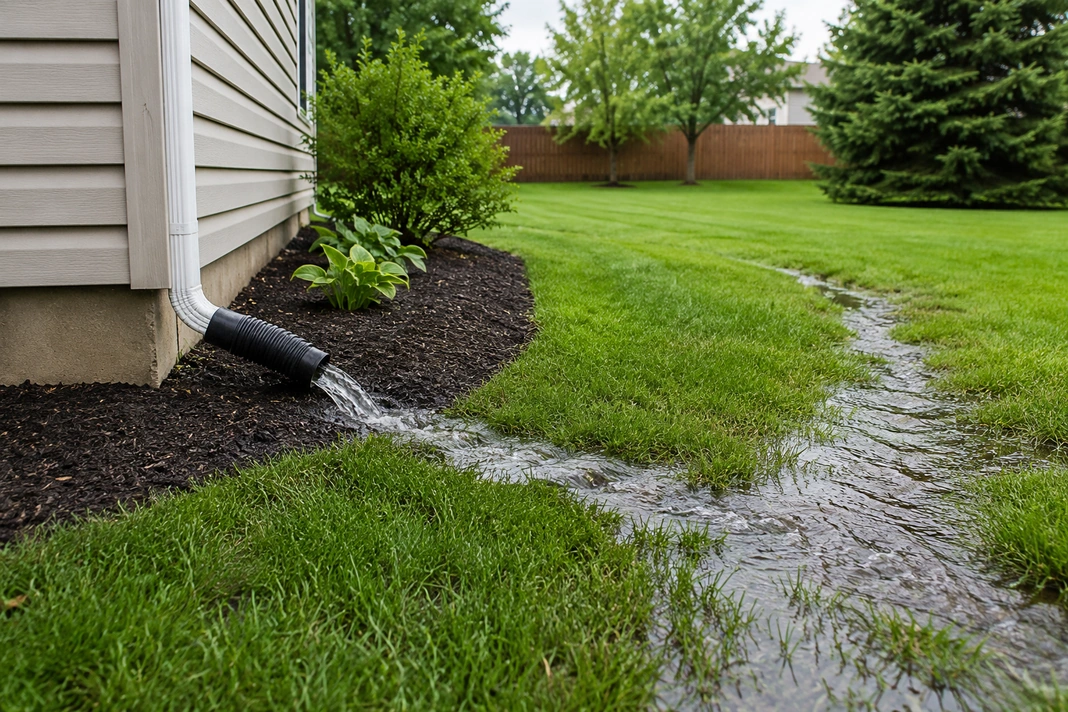
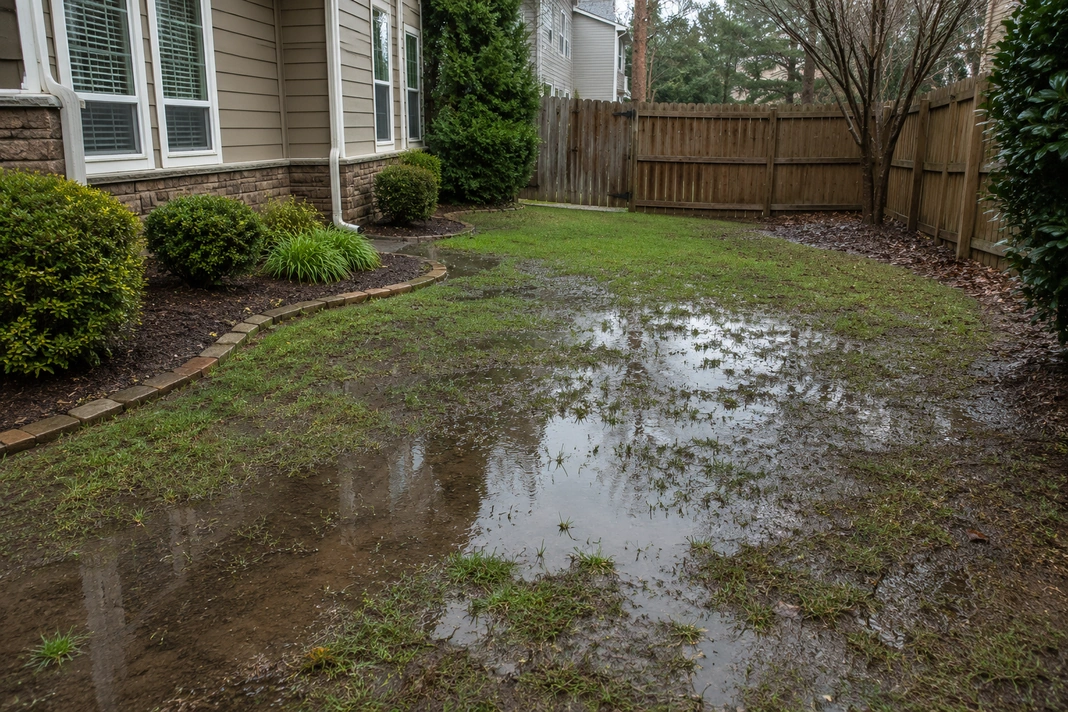
Standing water in yard areas can have several causes at the same time. A downspout may discharge too close to a low lawn. Compacted soil may then slow absorption while a raised path blocks the natural outlet.
Do not start by choosing a French drain, catch basin, or rain garden. First confirm which part of the water path is failing. The correct backyard drainage solutions depend on the source, available fall, soil, property boundaries, utilities, and local stormwater rules.
How Long Does Water Remain After Rain?
Water duration helps separate brief surface wetness from recurring yard drainage problems. Weather, soil, shade, season, and groundwater affect drying time, so one universal deadline does not fit every property.
| Observed duration or pattern | What it may indicate | Reasonable next step |
|---|---|---|
| Water appears only during intense rain and then moves through the yard | Temporary surface flow may be using an intended route | Confirm that the route avoids the house, paths, erosion, and neighboring property |
| A low area remains soft for several hours after ordinary rain | Slow infiltration, compaction, shade, or a shallow depression | Record the area and compare it after the next similar rainfall |
| Water remains into the next day after moderate rain | Persistent low point, poor soil infiltration, blocked outlet, or high seasonal saturation | Trace the source and arrange assessment when the pattern repeats |
| The same puddle returns after small rainfall | Recurring grade, soil, discharge, or drainage-system problem | Stop adding water from irrigation and identify the failed part of the route |
| Water reaches the foundation, crawl space, basement opening, or exterior electrical equipment | Higher property-damage or safety risk | Restrict access and arrange prompt professional assessment |
| Water crosses a public path or enters neighboring land | The discharge route may be unsafe or locally restricted | Do not redirect more water until local requirements and the full site path are checked |
Where Do Yard Drainage Problems Appear?
Check the property by drainage zone rather than looking only at the deepest puddle. For a full roof-to-yard walkaround, use the exterior home maintenance checklist.
Roof and Downspout Zone
Look for short extensions, disconnected fittings, overflow marks, buried-pipe backup, and concentrated flow beside the wall.
Roof water can overwhelm a small lawn area even when the soil drains normally.
Use the gutter cleaning guide when overflow, outlet blockage, or slow downspout flow begins above the ground-discharge point.
Foundation Edge
Look for settled soil, inward slope, splash marks, damp masonry, eroded mulch, and water pooling near foundation walls or openings.
The University of Minnesota Extension explains that grading, gutters, and downspouts work together to control water near foundations. Review its basement moisture and drainage guidance.
Lawn and Low-Spot Zone
Lawn drainage problems may appear as a soggy yard, yellowing turf, bare mud, moss, rutting, footprints that hold water, and areas that stay soft after nearby ground dries.
Compare the wet spot with surrounding elevation and traffic patterns.
Paths, Patios, and Driveways
Hard surfaces can accelerate runoff, block shallow flow, or create a raised edge around a lawn.
Check channel drains, joints, outlets, settlement, and whether water crosses a walking route.
Boundaries and Neighboring Runoff
Observe water entering through fences, slopes, retaining walls, or shared drainage routes.
Do not build a barrier that simply pushes runoff onto another property.
Surface Drains and Outlets
Look for leaves, sediment, mulch, roots, collapsed grates, damaged pipe, and water rising from a drain instead of entering it.
Do not open concealed drainage systems during active flooding.
What Causes Poor Yard Drainage?
Low Spots and Settled Ground
Water follows gravity and collects where soil has settled or the original grade contains a depression.
Filling the visible puddle without restoring a continuous route may move water toward another area.
Compacted or Slow-Draining Soil
Heavy traffic, construction equipment, repeated vehicle use, and working wet soil can reduce pore space.
The University of Minnesota Extension notes that compacted soil has lower water infiltration and drainage because larger pores that move water are reduced. See its soil compaction guidance.
Downspout Discharge in the Wrong Place
A downspout can create water pooling in yard areas when it ends in a depression, beside the foundation, behind edging, or above saturated soil.
An extension should lead to a suitable destination, not merely farther from the pipe.
Blocked or Failed Drainage Components
Leaves, sediment, roots, collapsed pipe, damaged outlets, and disconnected underground fittings can prevent an existing system from working.
Recurring backup at one grate may indicate a downstream problem rather than surface debris alone.
Raised Hardscaping and Landscape Edges
New paving, curbs, edging, retaining walls, and garden borders can interrupt shallow surface flow.
Check whether the problem began after landscaping or construction changed the ground level.
Seasonal Saturation and Groundwater
Extended rain, snowmelt, a high water table, springs, and low-lying land can keep soil saturated even when surface grading appears reasonable.
Subsurface conditions usually require professional evaluation before excavation or drainage installation.
How Do You Check Yard Drainage From High Point to Low Point?
Use a plain inspection sequence. Avoid digging until the surface route, legal outlet, and buried services are understood.
1. Start at the Highest Visible Source
Check the roof edge, downspout, uphill boundary, driveway, patio, irrigation head, or slope where water first appears.
2. Watch the First Direction of Flow
Note whether water follows grass, paving joints, beds, wheel ruts, fence lines, or a shallow channel.
3. Find the Place Where Water Slows
Look for a flat section, raised edge, compacted patch, blocked grate, dense vegetation, or reverse slope.
4. Check What Is Below the Low Point
Identify basements, crawl spaces, septic components, utilities, neighboring land, public paths, slopes, and walls before considering a new outlet.
5. Compare Soil and Surface Condition
Compare the wet area with nearby dry ground. Record compaction, clay texture, damaged turf, shade, roots, mulch, and hard surfaces.
6. Check Existing Drains and Discharge Points
Inspect safely accessible grates, downspout outlets, swales, channels, and pipe ends for blockage or reverse flow.
7. Record the Yard After Rain
Photograph the source, route, low point, and exit from repeatable positions. Note rainfall intensity, start time, ponding depth reference, and how long the area remains wet.
Is the Problem Ponding, Erosion, or Saturation?
Ponding
- Water collects in one depression
- The surface may be calm rather than moving
- Mud, thinning grass, and mosquito activity may follow
- Likely checks include grade, soil, blocked edges, and nearby discharge
Erosion
- Water moves quickly enough to carry soil or mulch
- Channels, exposed roots, bare strips, and deposited sediment appear
- The source may be concentrated roof or hard-surface runoff
- Flow speed and energy need control, not only a deeper outlet
Saturation
- A broad area remains soft without one deep puddle
- Water may rise from below or move very slowly
- Seasonal groundwater, poor soil, shade, or extended rain may contribute
- Subsurface assessment may be required before installing drains
What Practical Solutions Can Improve Yard Drainage?
How to improve yard drainage depends on the failed part of the water path. To fix drainage problems in yard areas, the solution needs a suitable destination and must not create damage elsewhere.
| Observed condition | Possible response to assess | Important limit |
|---|---|---|
| Downspout ends beside the wall or in a lawn depression | Correct connection, suitable extension, splash control, or approved redirection | The new outlet must not create erosion, icing, path hazards, or neighboring runoff |
| Small isolated low spot with otherwise workable surface flow | Regrade or rebuild the low area with compatible soil and restored turf | The finished level must preserve drainage away from buildings and openings |
| Compacted lawn with shallow ponding | Reduce traffic, address compaction, improve soil condition, and restore vegetation | Aeration will not fix a buried blockage, high groundwater, or incorrect site grade |
| Runoff needs a shallow visible route | Vegetated swale, dry creek, or carefully graded landscape channel | The route needs continuous fall, erosion control, maintenance, and a safe outlet |
| Runoff can be captured and allowed to infiltrate in a suitable area | Rain garden or another approved green-infrastructure feature | Soil, setbacks, utilities, overflow, local rules, and seasonal groundwater must be checked |
| Water collects beside paving or a hard edge | Channel drain, surface inlet, regrading, or edge adjustment | The connected pipe and final discharge point must have capacity and lawful access |
| Water must be intercepted below the surface | Professionally designed French drain, interceptor drain, or subsurface system | Excavation without confirmed slope, outlet, utilities, and soil conditions can fail or create damage |
| Recurring yard flooding affects a wide area | Site survey, drainage design, municipal review, or coordinated stormwater plan | A single household drain may not solve upstream, groundwater, or neighborhood-scale flow |
The EPA describes rain gardens as shallow landscaped areas that collect rainwater from surfaces such as roofs, driveways, and streets so it can soak into the ground. Review the EPA’s rain garden guidance before treating one as a universal answer.
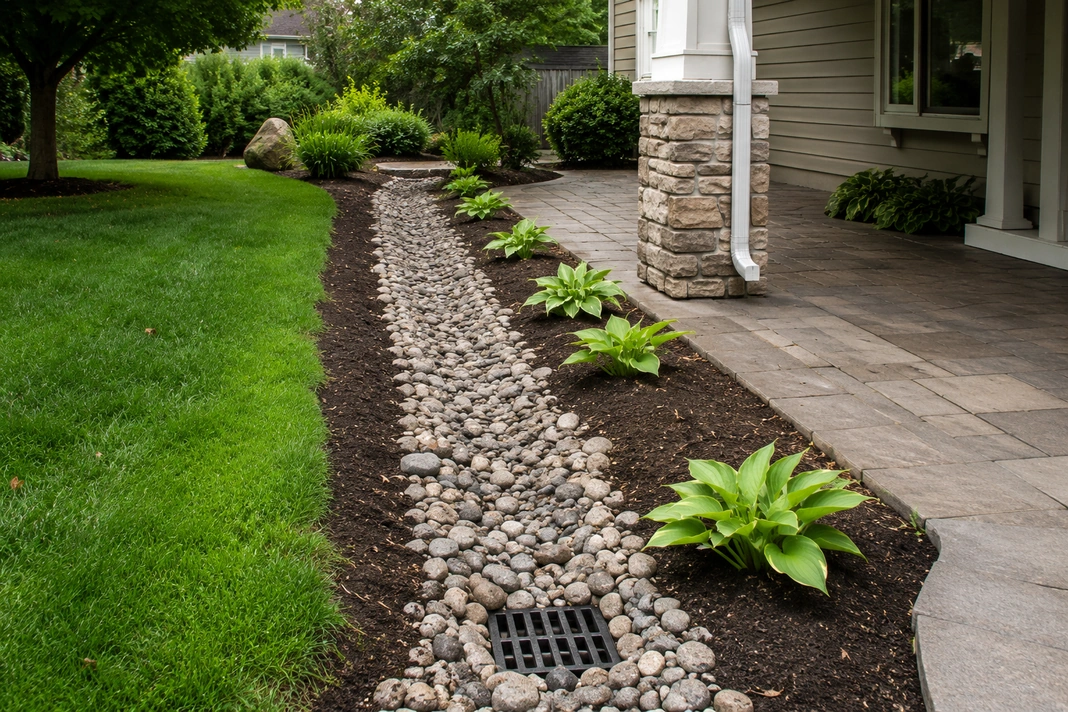
A French drain, catch basin, dry well, channel drain, swale, and rain garden solve different water-flow conditions. Each one depends on grade, soil, inflow, capacity, outlet, setbacks, maintenance, and local requirements.
Before digging, contact the relevant utility-location service and check permits, stormwater rules, easements, septic components, and property boundaries.
When Does Yard Drainage Need Professional Design?
Professional assessment is appropriate when the source is unclear, excavation is required, or the proposed work could affect a structure, utility, slope, neighboring property, or public drainage system.
Water entering a basement, crawl space, garage, foundation opening, or exterior electrical area.
Rapid erosion, retaining-wall movement, sinkholes, sewage odor, septic warning signs, unstable slopes, or water rising from an underground drain.
Repeated flooding across a large area, runoff arriving from beyond the property, or no lawful gravity outlet.
Contact emergency services when people face immediate danger, electrical equipment is affected, or floodwater blocks safe access.
A drainage contractor may assess surface and buried systems. A landscape architect, civil engineer, geotechnical professional, structural engineer, plumber, septic professional, or local authority may also be required depending on the evidence.
What Should Be Recorded Before and After Drainage Work?
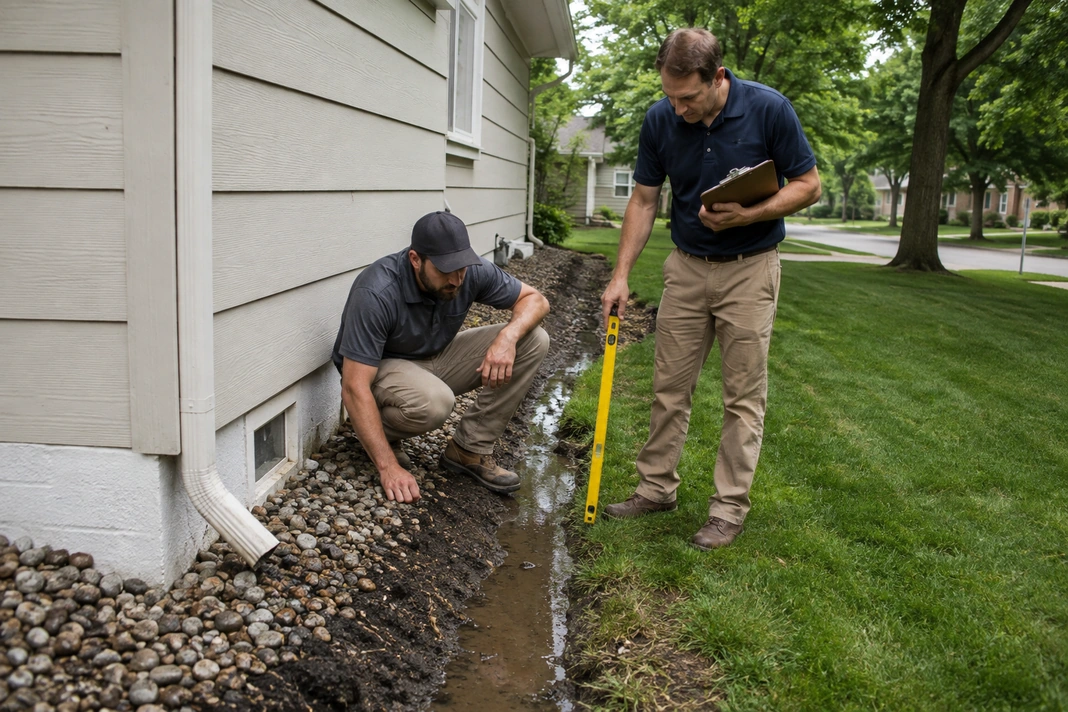
Record the date, rainfall pattern, source, visible route, low point, affected structures, ponding duration, soil condition, photographs, existing drains, and any recent landscaping or construction.
After work, repeat observations during similar rain. Record whether the source was reduced, the route changed, the low point cleared, and the final outlet remained stable.
Tenants should report access hazards, foundation entry, recurring puddles, erosion, and water linked to downspouts or irrigation. Landlords should record instructions, inspection findings, contractor scope, approvals, invoices, and follow-up.
Yard Drainage Works as One Continuous Route
Frequently Asked Questions
Why Is Water Pooling in My Yard After Rain?
Water may collect because of a low spot, compacted soil, poor grading, downspout discharge, blocked drainage, raised hardscaping, or seasonal saturation.
How Do I Find the Source of a Yard Drainage Problem?
Observe safe rainfall and record where water first appears, the route it follows, where it slows, and whether it reaches a suitable exit.
Can I Fill a Low Spot to Stop Standing Water?
Filling may help only when the completed grade preserves a continuous safe route. Adding soil without checking the outlet can move water toward buildings or neighboring land.
Does Aerating a Lawn Fix Poor Drainage?
Aeration may help compacted surface soil, but it will not correct incorrect grading, blocked pipe, high groundwater, or a downspout that discharges into the area.
Should a Downspout Empty Onto the Lawn?
Only when the lawn area can receive and move or absorb the water safely. The discharge must avoid foundations, paths, erosion, septic components, and neighboring property.
Is a French Drain the Best Yard Drainage Solution?
Not always. A French drain suits specific subsurface interception problems and requires fall, an outlet, appropriate soil conditions, utility checks, and correct construction.
What Is the Difference Between a Swale and a French Drain?
A swale is a shallow surface route that conveys or slows runoff. A French drain is a subsurface gravel-and-pipe system intended to intercept and move water below ground.
Can a Rain Garden Fix a Soggy Yard?
A rain garden may manage runoff in a suitable location, but it should not be placed in permanently saturated soil or used without checking setbacks, utilities, overflow, and local guidance.
When Is Standing Water Near a Foundation Urgent?
Act faster when water reaches an opening, enters the building, affects electricity, causes rapid erosion, or appears with foundation or retaining-wall movement.
Who Should Assess Serious Yard Drainage Problems?
The correct professional depends on the cause. A drainage contractor, landscape architect, civil engineer, geotechnical professional, structural engineer, plumber, septic professional, or local authority may be needed.

