






















Learning how to clean gutters starts with deciding whether the job can be completed safely. Check the ground, roof edge, gutter condition, nearby power lines, weather, and available equipment before choosing a cleaning method.
Stop when access is unstable, the gutter is loose, the roof edge is damaged, electrical lines are nearby, or the building height exceeds your safe working limits.
What Signs Show Gutters Need Attention?
Clogged gutters often reveal themselves during rain, but visible signs may appear in dry weather. Observe the roof edge and ground before moving equipment into place.
Blocked gutters do not always contain a visible mound of leaves. A compacted outlet, obstructed downspout bend, poor slope, or damaged section can produce similar overflow.

Should You Clean, Monitor, or Call a Professional?
The visible debris is only one part of the decision. Access, gutter condition, roof height, electrical exposure, and water damage determine whether household gutter cleaning is appropriate.
| Observed condition | Likely response | Why |
|---|---|---|
| Light dry debris in a low gutter that can be reached with a suitable ground tool | Ground-based cleaning may be reasonable | Access risk is lower and the gutter appears structurally stable |
| Debris is visible but the gutter is above a steep slope, steps, conservatory, or uneven ground | Use professional help | The surrounding surface prevents stable access |
| Gutter sags, separates, leaks at joints, or moves when touched | Arrange inspection and repair | Cleaning force may worsen loose or damaged components |
| Overflow appears but little debris is visible | Check outlet, downspout, slope, and hidden blockage | The restriction may sit beyond the visible trough |
| Power lines or live electrical equipment are close to the work area | Do not proceed with household access | Ladders, tools, and water can create electrocution risk |
| Water has entered walls, soffits, ceilings, or electrical fittings | Stop cleaning and arrange the relevant professional assessment | The job now includes water-damage or electrical risk |
| The gutter is clean and water flows correctly | Record the condition and monitor | Cleaning is not required simply because a calendar date has arrived |
How Does the Gutter System Carry Water?
A gutter should be treated as a connected route. Cleaning the trough without checking the outlet and downspout can leave the main restriction in place.
Use the exterior home maintenance checklist to inspect the roof edge, gutter, walls, foundation, and yard as one connected route.
Start observation at the discharge point and work backward. A dry outlet during rain may indicate a blockage above it. Water leaking from a downspout joint can show where the internal route is restricted.
The University of Minnesota Extension explains that gutters, downspouts, extensions, and grading work together to move roof water away from foundations. Review its moisture and drainage guidance.
Where Do Debris and Blockages Usually Collect?
Loose Surface Debris
Dry leaves, needles, seed pods, and small twigs may sit openly in the trough. They are often easiest to see and remove.
Do not push a large amount toward the outlet. This can turn loose debris into a compacted blockage.
Compacted Outlet Material
Wet leaves, roof granules, moss, and fine organic material can form a dense plug around the outlet.
Standing water near one end of the gutter often points toward the outlet, slope, or downspout route.
Downspout Bends and Joints
Debris can lodge at elbows, offsets, fasteners, crushed sections, or underground connections.
A clean trough with slow discharge may indicate that the obstruction sits inside the downspout.
Guards and Covered Gutters
Gutter guards can reduce larger debris but still collect leaves, needles, sediment, and growth on or beneath the cover.
Follow the guard manufacturer’s access and cleaning instructions. Do not pry up unfamiliar covers.
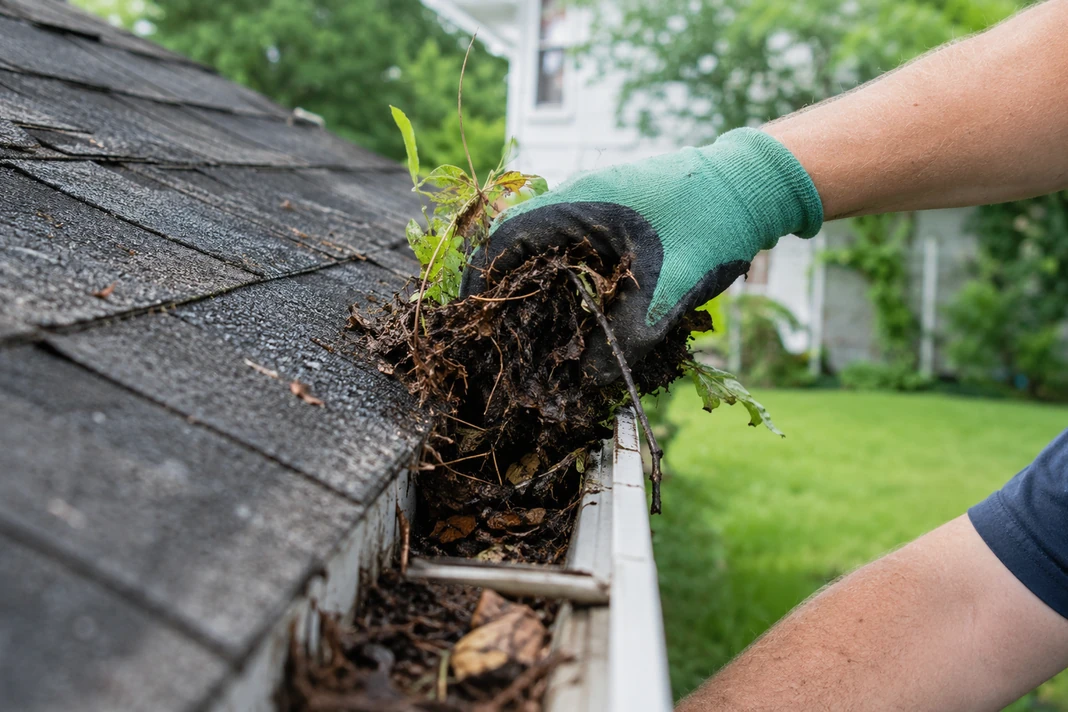
How to Clean Gutters Safely
How to clean gutters safely depends on the building, debris, equipment, weather, and person doing the work. Do not treat ladder access as the automatic starting point.
1. Inspect From the Ground
Look for debris, sagging, loose brackets, damaged roof edges, nearby electrical lines, unstable ground, and obstacles beneath the work area.
Use binoculars or zoomed photographs where they provide a clear view. Stop if the gutter appears damaged or access cannot be controlled.
2. Check the Discharge Route
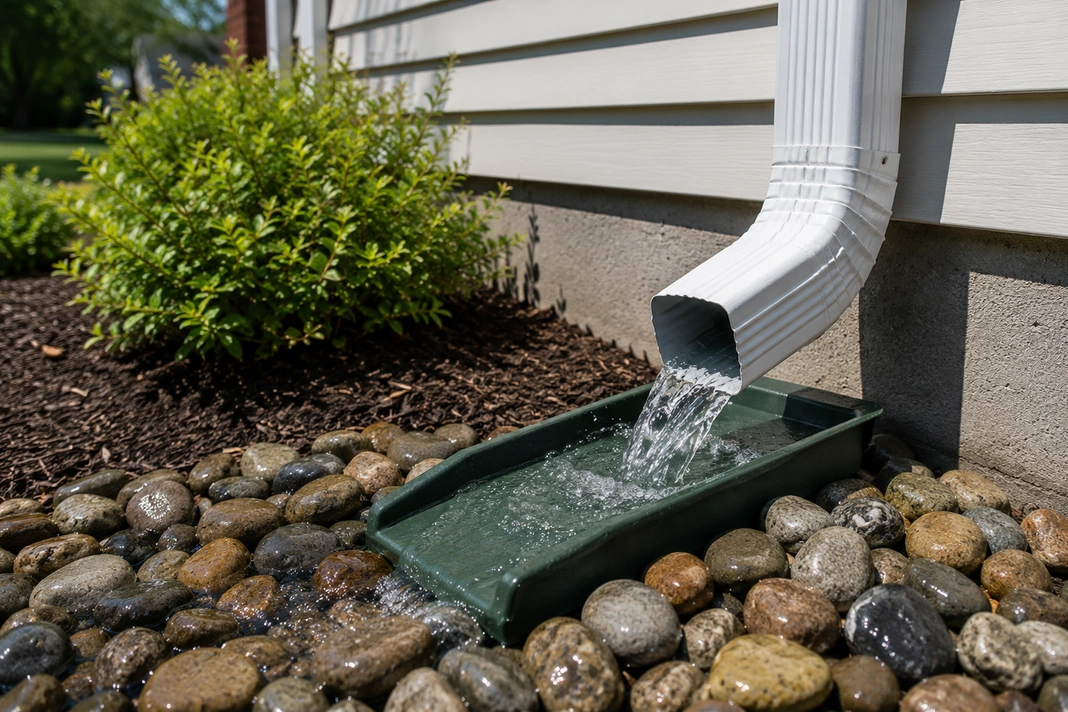
Locate the downspout outlet, extension, splash block, underground connection, or surface drainage path.
Remove only safely accessible ground-level debris. Make sure discharged water will not cross a walkway, enter the building, or collect beside the wall.
3. Choose a Ground-Based Method First
When deciding how to clean gutters from the ground, suitable telescopic tools may remove light debris or loosen material while the user remains on stable ground.
Test the tool’s weight, balance, reach, and control before raising it. Keep people, pets, vehicles, windows, and electrical equipment outside the working area.
4. Set a Clear Ladder Boundary
Use ladder access only when the equipment, surface, height, weather, surroundings, and physical ability make the task appropriate.
The CPSC advises placing the ladder on stable ground, using another adult as a spotter, avoiding the top rung, and keeping the ladder away from power lines. Read its Home Safe outdoor repairs checklist.
5. Remove Debris Without Overreaching
Wear suitable gloves and eye protection. Remove loose material in small amounts and keep it out of the outlet.
Do not lean sideways, stand on an unsafe rung, climb onto the roof, or reposition a ladder while someone remains on it. Climb down and reset the work area instead.
6. Clear the Outlet and Downspout
Remove visible material around the outlet before introducing water. Check accessible downspout joints and the ground discharge.
Stop when the blockage is concealed, the downspout enters an underground system, water backs up toward the roofline, or dismantling would require unsafe access.
7. Test With Controlled Water
Use a limited flow only after loose debris is removed and the discharge route is open. Observe whether water reaches the outlet, passes through the downspout, and leaves the building area.
Stop when water backs up, leaks behind the gutter, escapes at joints, or remains standing.
8. Record Cleaning and Defects
Note the cleaning date, debris type, blocked location, overflow marks, loose components, water test, and recommended follow-up.
Photographs help show whether sagging, staining, joint leakage, or ground erosion changes over time.
The CPSC warns that consumers can be electrocuted when ladders contact overhead wires during gutter cleaning. Review its Ladders and Electricity Don’t Mix guidance.
Do not assume a covered or insulated-looking line is safe. Use professional help when any part of the ladder, tool, water stream, or worker could enter the electrical hazard area.
Can You Clean Gutters From the Ground?
People searching how to clean gutters without climbing often need to know what ground tools can and cannot do. They may reduce fall exposure, but they do not remove every access or control risk.
Do not use an overhead tool that becomes difficult to balance, blocks your view, throws debris toward people, or approaches electrical lines. Avoid high pressure that can damage joints, force water beneath roofing, or spread dirty water.

How Often Should Gutters Be Cleaned?
There is no single schedule that suits every property. How often to clean gutters depends on the debris source, roof shape, gutter capacity, guards, weather, and what the last inspection found.
Lower Debris Pressure
- Few nearby trees
- Open roof edges
- Good water flow
- Little material found at the last inspection
- No recurring overflow marks
Moderate Debris Pressure
- Seasonal leaves or seed pods
- One roof valley feeds a short gutter
- Guards collect surface material
- Previous outlet buildup
- Occasional overflow during heavy rain
Higher Debris Pressure
- Overhanging trees or pine needles
- Moss, roof granules, nests, or plant growth
- Repeated blocked gutters
- Storm debris or ice-related movement
- Water damage, sagging, or recurring downspout blockage
Use the first year as a learning period. Inspect after major debris seasons and storms, record what each check finds, then set the next interval from the actual buildup rate.
When to clean gutters should be driven by evidence. Visible debris, overflow, slow discharge, plant growth, staining, standing water, or a blocked outlet justifies action before the next planned date.
How Do You Test Gutters After Cleaning?
A clean-looking trough does not confirm that the system works. The test must follow water from the cleaned section to the final discharge point.
If water leaves the downspout but pools near the house or across the lawn, continue with the yard drainage guide.
When Does a Gutter Need Repair Instead of Cleaning?
Gutter maintenance should not repeatedly clear debris while ignoring movement, failed joints, incorrect slope, rotten fascia, or an undersized discharge route.
| Observed evidence | Cleaning may address | Repair or assessment may be needed |
|---|---|---|
| Leaves and loose debris | Remove material and test flow | Repair if brackets or joints move during cleaning |
| Standing water after the outlet clears | Remove remaining sediment | Correct slope, support, deformation, or outlet position |
| Leak at a seam or end cap | Clean the area for inspection | Reseal, refit, or replace the failed component |
| Gutter pulls away from fascia | Cleaning may reduce weight | Assess brackets, fascia condition, and fixing points |
| Water passes behind the gutter | Cleaning alone may not help | Inspect roof edge, flashing, apron, alignment, and attachment |
| Downspout repeatedly blocks | Clear accessible debris | Inspect bends, crushing, underground connection, capacity, and debris source |
| Overflow continues during ordinary rain | Confirm the system is fully clear | Assess capacity, slope, outlets, roof runoff, and installation |
Applying sealant to a dirty joint, repainting stained fascia, or fitting another guard will not correct a loose gutter, poor slope, damaged roof edge, or concealed downspout obstruction.
Identify whether the failure is debris, movement, capacity, installation, or the ground discharge route before choosing the repair.
When Should You Hire Gutter Cleaning Help?
Professional gutter cleaning is the safer choice when the building, access, equipment, weather, or user creates unacceptable risk.
The gutter is high, difficult to reach, above sloping ground, near electrical lines, over a conservatory or extension, or beside fragile roofing.
Arrange assessment when the gutter sags, fascia appears rotten, joints separate, overflow enters the building, the downspout connects underground, or the same blockage returns.
Stop immediately if wind, rain, ice, heat, poor visibility, physical discomfort, or unstable equipment affects control.
Ask the contractor whether the quotation covers gutter debris removal, downspout clearing, flow testing, cleanup, photographs, minor repairs, and disposal. Confirm whether guards must be removed and reinstalled.
What Should Be Recorded After Gutter Maintenance?
Record the date, weather, gutter elevation, debris type, outlet condition, downspout flow, discharge area, visible defects, cleaning method, person or contractor, photographs, and next review date.
Tenants should report overflow, active water entry, loose components, damaged access areas, and any indoor staining linked to rainfall. Landlords should record instructions, attendance, findings, repairs, invoices, and follow-up.
The record answers how often to clean gutters using evidence from the property rather than a generic interval. It also shows whether repeated cleaning is controlling the problem or merely delaying repair.
Cleaning Is Complete Only When Water Has a Clear Route
Frequently Asked Questions
What Is the Safest Way to Clean Gutters?
How to clean gutters safely begins from the ground. Inspect the gutter and surroundings, use ground tools where suitable, and stop when height, damage, weather, or electrical exposure makes access unsafe.
Can I Clean Gutters From the Ground?
Ground tools may remove light debris from low and visible gutters. They are less suitable for compacted outlets, damaged gutters, concealed downspout clogs, and uncontrolled overhead reach.
How Often Should Gutters Be Cleaned?
Set the schedule from nearby trees, weather, guards, roof shape, previous buildup, and water flow. Inspect after major debris seasons and storms, then adjust from what you find.
What Are the Signs of Clogged Gutters?
Common signs include visible debris, overflow, standing water, plant growth, staining, joint leakage, slow downspout discharge, and water collecting beside the building.
Should I Flush Gutters With a Hose?
Use controlled water only after bulk debris is removed and the outlet and discharge route are open. Stop if water backs up, leaks behind the gutter, or causes erosion.
Why Is Water Still Standing After Gutter Cleaning?
Standing water may indicate remaining sediment, a blocked outlet, poor slope, sagging, deformation, or an installation problem.
Do Gutter Guards Remove the Need for Cleaning?
No. Guards may reduce larger debris but can still collect leaves, needles, sediment, and growth. Follow the manufacturer’s inspection and maintenance instructions.
When Should a Downspout Be Professionally Cleared?
Use professional help when the blockage is concealed, the downspout is high or damaged, it enters an underground system, or repeated clearing does not restore flow.
Can Overflowing Gutters Damage a House?
Overflow can wet fascia, soffits, siding, walls, soil, paths, and foundation areas. The effect depends on the water path, duration, materials, and drainage conditions.
What Should a Gutter Cleaning Quote Include?
Confirm whether it includes debris removal, downspout clearing, flow testing, cleanup, photographs, guard handling, minor repairs, disposal, and follow-up.

