







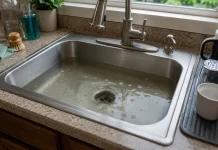



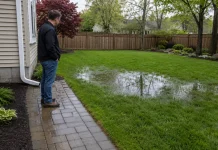
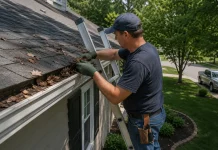









Exterior home maintenance works best as a route around the property rather than a random list of jobs. Start at the roofline, follow rainwater to the ground, inspect the building envelope, then finish with access areas and the yard.
Record changes before arranging work. A loose railing, overflowing gutter, widening crack, damaged roof edge, or water collecting beside the foundation deserves more attention than a stable cosmetic mark.
Start With Five Exterior Zones
A complete exterior home maintenance checklist should show how one area affects another. Roof runoff can expose a gutter fault. A short downspout can create foundation moisture. Overgrown vegetation can hide damaged siding or block airflow.
Walk the same route after major storms and at planned seasonal intervals. Consistent photographs make it easier to see whether a condition is stable or changing.

How Should Exterior Problems Be Prioritized?
Exterior house maintenance is not simply a choice between repairing something now or leaving it until next year. Sort each observation by safety, active water movement, security, structural change, and rate of deterioration.
| Priority | Observed condition | Recommended response |
|---|---|---|
| Immediate safety action | Falling material, unstable railing, exposed live wiring, major storm damage, blocked safe exit | Restrict access and contact emergency services or the appropriate professional when immediate danger exists |
| Urgent exterior repair | Active roof entry, overflowing water reaching the building, rapidly widening crack, loose exterior door, unstable step | Protect the area and arrange prompt professional assessment |
| Preventive repair | Open sealant joint, loose gutter bracket, early rot, peeling coating, minor erosion, vegetation touching the wall | Schedule correction before weather or repeated use worsens the defect |
| Routine maintenance | Debris removal, cleaning, trimming, coating review, minor hardware tightening | Add the task to the seasonal plan and record completion |
| Monitor | Stable cosmetic mark, old repair with no change, minor surface variation | Photograph, date, and compare during the next inspection |
Walk Around the Property in Inspection Order
This route keeps related evidence together. Begin far enough from the building to see the roofline, then move closer only where the ground is dry, stable, and clear.
1. View the Roofline From the Ground
Look for missing, lifted, cracked, or displaced roof material. Check ridges, valleys, flashing, roof edges, chimneys, and visible vents from a safe position.
2. Follow the Gutters and Downspouts
Look for sagging sections, open joints, staining beneath seams, missing brackets, vegetation, visible debris, and downspouts that end beside the wall.
During safe rainfall observation, note where water overflows or bypasses the gutter. Do not stand beneath unstable roof edges or work near power lines.
3. Inspect Walls, Siding, Trim, and Vents
Walk each elevation and compare material condition. Look for cracks, impact damage, open joints, loose panels, rot, corrosion, blistering finishes, and gaps around service penetrations.
Vegetation should not hide the lower wall, hold moisture against cladding, or block intended vents. Avoid sealing a vent simply because air or insects can pass through it. The correct repair depends on the vent’s function.
4. Check Windows, Exterior Doors, and Seals
Inspect frames, trim, sills, thresholds, weather seals, visible flashing, and sealant joints. Watch for peeling finishes, soft timber, open corners, rust, staining, or water tracks.
Operate accessible doors and windows gently. Binding, movement, or repeated water entry may involve alignment, swelling, hardware, or surrounding construction.
5. Inspect the Foundation Edge and Visible Cracks
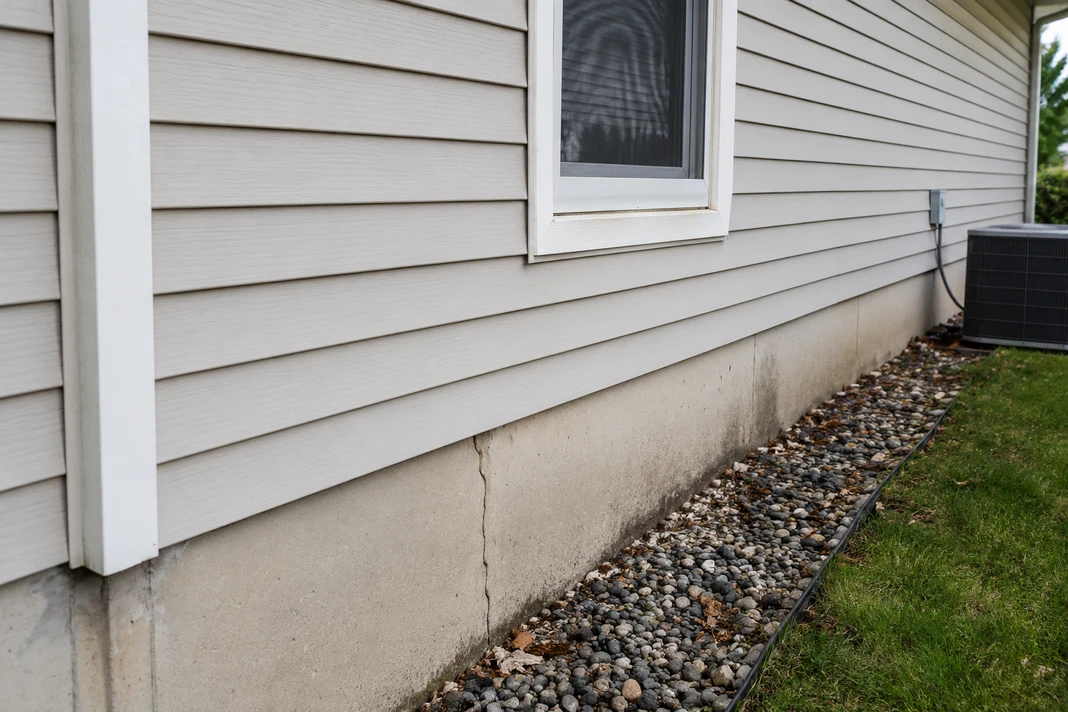
Check visible foundation walls, piers, crawl-space openings, vents, window wells, and transitions between the building and ground.
A small stable surface crack differs from sudden displacement, widening, stair-step cracking, bowing, or a crack combined with doors that begin binding. Do not fill a changing crack before the movement is assessed.
6. Follow the Slope Away From the Building
Look for soil that slopes toward the wall, settled backfill, low areas beside steps, erosion channels, exposed roots, splash marks, and standing water.
Use the yard drainage guide to trace water from its source through the low point to a suitable exit.
The University of Minnesota Extension explains that grading, gutters, and downspouts work together to control water near a foundation. It notes that one inch of rain can place about 1,250 gallons on a 2,000-square-foot roof. Review its moisture and drainage guidance.
7. Check Paths, Steps, Decks, Porches, and Railings
Look for trip edges, loose pavers, cracked steps, moving handrails, loose fasteners, soft boards, rot, corrosion, settlement, and erosion around supports.
Apply controlled pressure only to safely accessible railings and boards. Stop using an area that moves, feels soft, has a missing guard, or shows support damage.
8. Finish With Trees, Vegetation, Fences, and Yard Hazards
Check for dead or hanging branches, limbs touching the roof, roots lifting paths, dense growth against walls, unstable fence posts, sharp hardware, and debris blocking drainage routes.
Do not cut branches near power lines or work beneath storm-damaged limbs. A qualified tree professional should assess large, elevated, split, or leaning branches.
How Does Rainwater Move Around the Property?
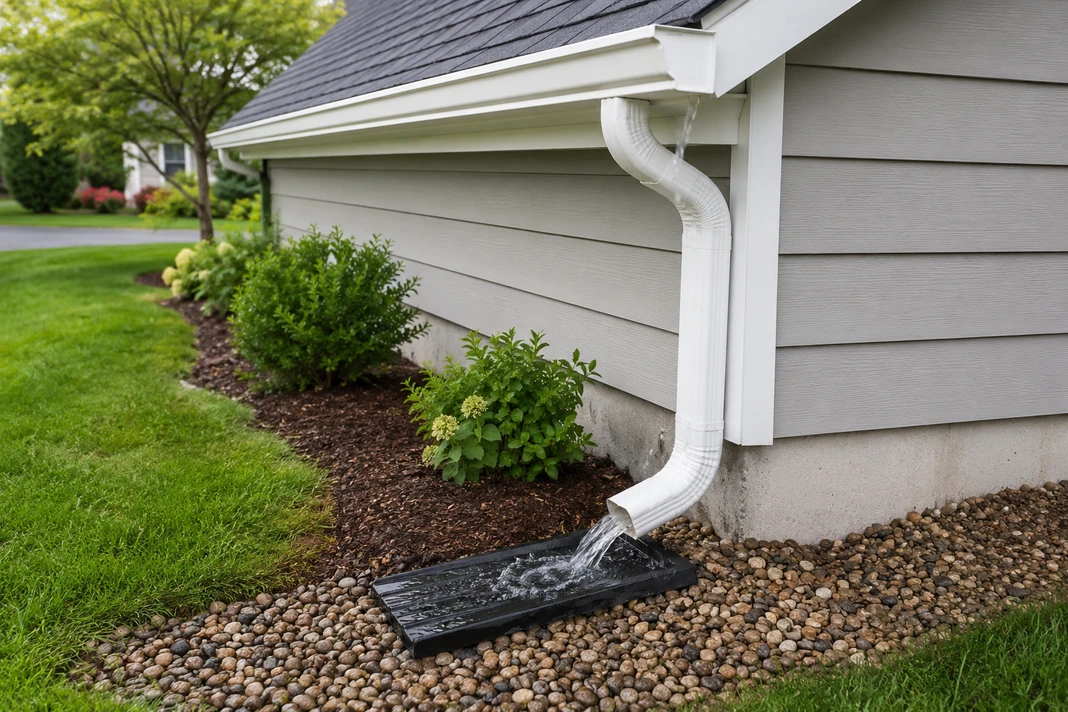
Rainwater management is one of the central relationships in outdoor property maintenance. A defect at one stage can move water toward another surface rather than away from the building.
Observe the pathway during moderate rain only from a safe, sheltered position. Watch for water overshooting the gutter, leaking at joints, pouring beside the wall, crossing a path, eroding soil, or collecting at a low point.
The U.S. EPA explains that redirecting a downspout toward a suitable lawn, garden, or other permeable area can reduce runoff. It also warns that redirection is not appropriate everywhere and must avoid property damage, unsafe conditions, and local-rule conflicts. See the EPA’s downspout redirection guidance.
A longer extension is not automatically correct. The outlet must not discharge toward a neighboring property, public path, unstable slope, septic component, building opening, or area that cannot absorb or convey the flow.
What Should Be Checked in Each Season?
A seasonal exterior home maintenance checklist should respond to local weather rather than use the same task list everywhere. Shift the timing for snow, wildfire, heavy rain, coastal exposure, heat, wind, or long dry periods.
Spring
- Look for winter or storm damage at the roofline
- Check gutters, downspouts, and drainage discharge
- Record soil settlement and water collecting near the building
- Inspect steps, paths, decks, and railings after freeze-thaw movement
- Trim vegetation before it hides lower walls and drainage routes
Summer
- Review paint, coatings, sealant joints, siding, and trim
- Check decks, fences, gates, and exterior hardware during dry conditions
- Look for sun damage, splitting, movement, and pest entry points
- Keep plants from trapping moisture against walls
- Plan professional roof or tree work before severe weather
Fall
- Observe leaves and debris around gutters and surface drains
- Check the complete roof-to-ground water pathway
- Remove trip hazards and maintain safe access before colder weather
- Inspect exterior lighting and visible outdoor electrical damage
- Record branches that may contact the roof during wind
Winter
- Inspect from the ground after wind, snow, ice, or heavy rain
- Keep safe entrances, steps, and paths clear
- Look for ice-related gutter movement or new roof-edge damage
- Monitor new interior moisture that follows exterior weather
- Delay unsafe ladder, roof, and tree work
Which Checks Are Safe From Ground Level?
An outdoor home maintenance checklist should define where observation ends. A useful inspection does not require climbing onto the roof, leaning from a window, entering unstable structures, or working beneath damaged branches.
Reasonable Ground-Level Checks
- Walk the property on dry and stable ground
- Use zoomed photographs or binoculars for the roofline
- Compare dated photographs from the same position
- Observe drainage during safe rainfall conditions
- Check accessible doors, gates, railings, and low-level finishes
- Record defects without cutting, prying, or dismantling
Checks That Need Professional Access
- Wet, steep, fragile, storm-damaged, or unfamiliar roofs
- High gutters or downspouts near power lines
- Unstable decks, balconies, porches, and elevated structures
- Large branches, split trees, and work near electrical lines
- Open excavation, retaining-wall movement, or unstable slopes
- Hidden structural, electrical, or water-entry investigation
The CPSC advises outdoor-repair users to place ladders on stable ground, use a helper, keep ladders away from power lines, and avoid standing on the top rung. Its guidance also recommends professional deck inspection when structural condition is uncertain. Read the CPSC outdoor repairs checklist.
Ground-level observation is the safer default when access, weather, equipment, physical ability, or nearby services create doubt.
When Does Exterior Maintenance Become Urgent?
Routine exterior home maintenance becomes urgent when a condition threatens people, allows active water entry, affects security, or changes rapidly.
Falling roof or wall material, a moving railing, unstable steps, a sagging deck section, exposed electrical damage, a tree or branch threatening the building, or a blocked safe entrance.
Active roof entry, water reaching electrical equipment, rapid foundation movement, severe storm damage, or a door that cannot secure the property requires prompt professional assessment.
Contact emergency services when anyone faces immediate danger. Do not remain beneath falling materials or approach damaged power lines.
How Should Exterior Maintenance Be Recorded?
A home exterior maintenance checklist becomes more useful when it separates observation from diagnosis. Record what can be seen, where it appears, what changed, and what action followed.
| Record field | What to include | Why it helps |
|---|---|---|
| Date and weather | Inspection date, recent rain, wind, heat, snow, or storm | Connects the condition with weather exposure |
| Property zone | Roofline, wall, opening, foundation edge, access area, or yard | Keeps contractor instructions precise |
| Observed condition | Movement, staining, crack, loose part, overflow, rot, corrosion, erosion | Describes evidence without guessing the cause |
| Priority | Immediate, urgent, preventive, routine, or monitor | Prevents cosmetic work from displacing safety and water-control tasks |
| Photograph reference | File name or image taken from a repeatable position | Shows whether the condition changes |
| Assigned action | Monitor, clean, trim, repair, inspect, or restrict access | Turns the inspection into a traceable task |
| Completion and follow-up | Contractor, work date, invoice, result, next review date | Confirms whether the original warning sign was resolved |
Tenants should report active water entry, unsafe access, loose railings, falling materials, security problems, and visible storm damage promptly. Landlords and property managers should record the report, access arrangements, instructions, contractor findings, completed work, and follow-up.

How Do You Build an Annual Exterior Maintenance Plan?
Do not treat every observation as a separate project. Group work by risk, access, trade, weather window, and dependency.
First: remove immediate safety and access risks.
Second: stop active water entry and correct roof-to-ground drainage faults.
Third: repair openings, loose components, damaged finishes, and early decay.
Fourth: complete cleaning, trimming, coatings, and appearance work after the source problem is resolved.
Finally: set the next inspection date and preserve before-and-after records.
This order prevents repainting over water damage, replacing a surface before movement is assessed, or cleaning one component while the connected drainage route remains blocked.
A practical exterior home maintenance plan should also account for contractor availability, local permits, warranties, material compatibility, and weather needed for safe curing or installation.
The Best Exterior Check Follows the Property
Frequently Asked Questions
How Often Should Exterior Home Maintenance Be Checked?
Perform a planned walkaround at least seasonally and after major storms. Adjust the schedule for local rain, snow, heat, wind, wildfire, coastal exposure, and vegetation growth.
What Should Be Checked First Outside a House?
Start with immediate safety hazards, then view the roofline and follow the rainwater route through gutters, downspouts, ground discharge, and site drainage.
Can I Inspect the Roof Without Climbing?
Yes. Ground-level photographs, binoculars, and observations from safe public or property areas can reveal missing material, debris, movement, and damaged edges.
Why Should Gutters and Ground Drainage Be Checked Together?
Gutters collect roof water, while downspouts and ground drainage control where it goes. A fault in either area can concentrate water near walls, paths, or foundations.
What Exterior Cracks Need Faster Attention?
Seek assessment when a crack widens, shows displacement, follows a stair-step pattern, appears with bowing, or coincides with doors, windows, or floors changing.
When Is a Loose Railing an Urgent Repair?
A railing is urgent when people rely on it for safe access or fall protection. Restrict the area when movement, missing fixings, rot, corrosion, or support damage appears.
Should Plants Touch Exterior Walls?
Dense vegetation can hide defects, hold moisture, block airflow, obstruct vents, and make inspection difficult. Maintain suitable clearance for the plant, wall system, and local conditions.
What Should Be Recorded During an Exterior Inspection?
Record the date, weather, property zone, exact condition, priority, photograph reference, assigned action, completion, and follow-up date.
Does Exterior Maintenance Increase Property Value?
Exterior maintenance can protect function, appearance, weather resistance, and buyer confidence. The effect depends on the property, local market, defect, and quality of completed work.
Who Should Inspect Exterior Structural Movement?
The correct professional depends on the condition. A structural engineer or qualified building professional should assess suspected foundation, wall, deck, retaining-wall, or structural movement.

