










If your door lock is not working, stop forcing the key or handle. First check whether the problem changes when the door is open, whether a spare key behaves differently, and whether the latch or bolt aligns with the frame.
Act faster when the door cannot secure the property, someone is locked in or out, the key is bending, the handle is loose, or the affected door is part of the home’s escape route.
Safety warning Do not drill, pick, pry, climb, break glass, or force entry. Call emergency services when a child, vulnerable person, fire, medical need, active appliance, or another immediate danger is inside.
Quick Summary
- Test the lock gently with the door open only when you already have safe access.
- Try a known spare key to separate a worn-key problem from a lock problem.
- Stop when the key bends, the cylinder spins, or the handle pulls away.
- Treat a door that will not secure as a property-safety issue.
- Use a verified locksmith when safe access or dependable locking cannot be restored.
What Are the Earliest Signs of Door Lock Problems?
Door lock problems often begin as small changes in movement, alignment, or sound. A door lock not working smoothly today may become a broken key, damaged latch, or complete lockout later.
Key Not Turning in Lock: Early Resistance
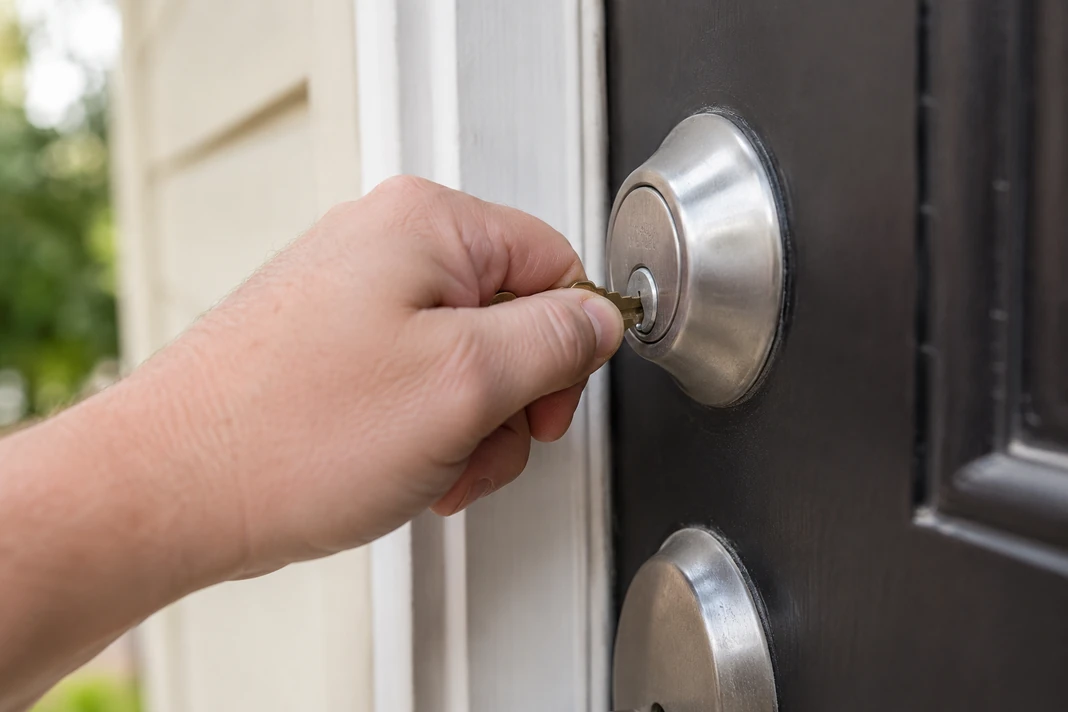
A key that once turned smoothly may begin to catch, resist, or require movement before the lock engages. Stop using extra force.
Resistance can relate to the key, dirt, internal wear, weather, or pressure between the bolt and strike plate.
Door Won’t Lock When It Is Closed
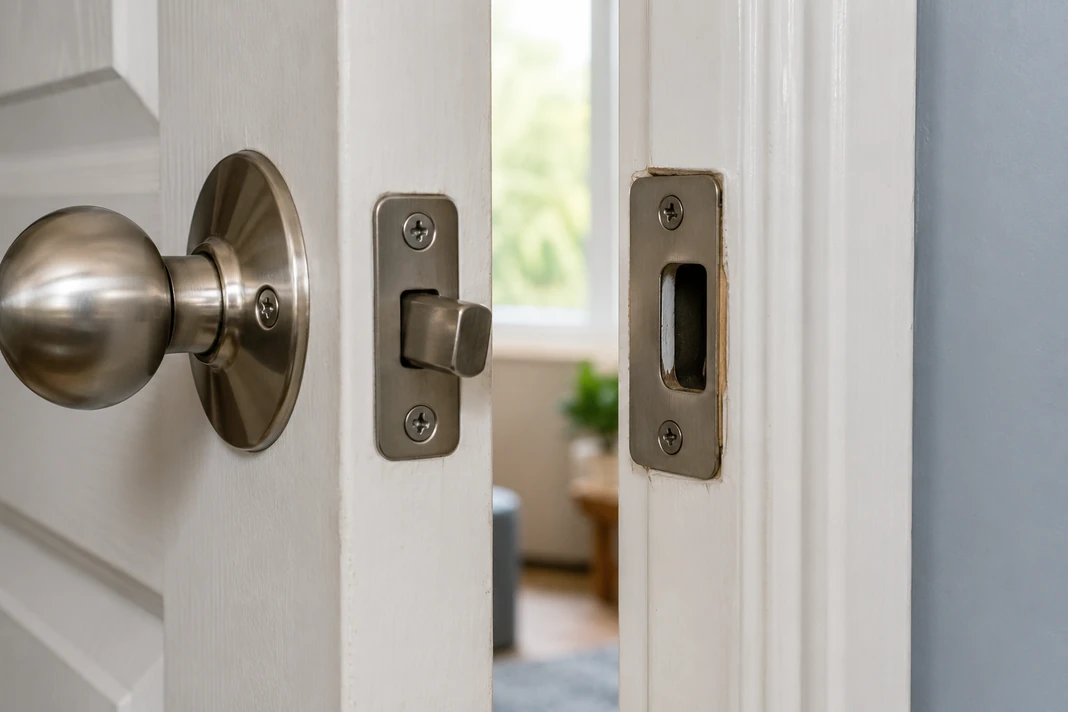
If the lock operates normally with the door open but resists when closed, alignment is a strong possibility. The door, frame, hinges, latch, or strike plate may have moved.
This simple observation is more useful than repeatedly forcing the key while the door is closed.
Door Handle Not Working or Returning Properly
A loose handle, lever that droops, or handle that no longer retracts the latch can indicate worn fixings or an internal mechanism fault.
When a door handle is not working, avoid pulling harder. Extra force can damage the spindle, latch, or surrounding door material.
The Lock or Latch Sounds Different
Grinding, scraping, clicking without engagement, or a cylinder that spins can indicate wear or disconnection inside the hardware.
Record what moves and what does not. Do not open the lock body or remove security hardware from an exterior door unless you are qualified.
The Door Needs Lifting, Pushing, or Pulling
A door that must be lifted or pressed into the frame before locking may be sagging, swollen, or misaligned.
This pattern can worsen as hinges loosen, weather changes, or moisture affects the door and frame.
The Problem Keeps Returning
A stuck door lock that improves briefly but becomes stiff again may have an unresolved alignment, wear, or internal-mechanism problem.
Repeated temporary fixes should not replace an assessment when the door protects the main entrance.
What Can the Symptom Tell You?
The symptom can suggest where to begin, but it cannot confirm the exact failed component. Stop testing when the door, key, or hardware begins to deform.
| Observed symptom | Possible explanation | Safe next step |
|---|---|---|
| Key works with the door open but not closed | Door, hinge, bolt, latch, or strike-plate alignment | Stop forcing and arrange adjustment if the pattern continues |
| One key fails but a spare key works | Worn, bent, damaged, or poorly copied key | Stop using the failing key and obtain a correct replacement |
| No key turns smoothly | Stuck door lock, contamination, wear, weather, or internal failure | Use only a lock-approved product and stop if resistance remains |
| Handle moves but the latch stays extended | Spindle, latch, spring, or handle-mechanism problem | Avoid repeated operation and arrange repair |
| Deadbolt enters the frame only when the door is pushed | Misalignment, sagging, swelling, or frame movement | Check visible gaps and seek adjustment |
| Cylinder spins or hardware pulls away | Loose fixings or internal lock failure | Stop using the door and contact a locksmith |
| Smart lock has no response | Battery, power, connectivity, calibration, or mechanism issue | Follow the manufacturer’s supported recovery process |
Why Is the Door Lock Not Working?
A door lock not working can involve the key, cylinder, latch, bolt, handle, hinges, frame, door material, or electronic controls. Several causes may appear together.
Worn, Bent, or Incorrect Key
Keys wear over time. A bent key or poor copy may enter the cylinder but fail to align the internal parts correctly.
Compare it with an undamaged spare. Do not copy a visibly worn key when an original or verified key code is available.
Dirt or Unsuitable Lubricant
Dust and residue can affect movement. Heavy oils may attract more dirt and create a short-lived improvement followed by greater resistance.
Use only a product approved for the lock type and follow the manufacturer’s instructions.
Door and Frame Misalignment
Loose hinges, building movement, temperature changes, or repeated slamming can move the latch or bolt away from the strike opening.
Visible rubbing marks and changing door gaps can support this explanation.
Moisture and Swelling
Timber doors and frames can swell after repeated moisture exposure. Paint may also bind at the edges and increase pressure on the lock.
Use the damp and moisture warning signs guide when swelling appears with staining, peeling finishes, damp odor, or recurring water entry.
Loose Hardware or Worn Mechanism
Loose screws, worn springs, broken spindles, and internal component failure can make the handle or lock feel disconnected.
External-door hardware must remain dependable. Arrange professional repair when tightening visible fixings does not restore normal operation.
Smart-Lock Power or Calibration Problem
Low batteries, lost calibration, connectivity failure, or motor resistance can prevent a smart lock from operating.
Use the manufacturer’s official instructions. Do not dismantle powered or connected security hardware while relying on it to secure the property.
How Does the APC Door–Lock–Access Test Work?
The Door–Lock–Access Test organizes the evidence without encouraging forced entry or unsafe dismantling.
Door
Observe whether the door sags, rubs, swells, or needs pressure before the latch or bolt aligns.
Compare the gaps around the frame without removing security hardware.
Lock
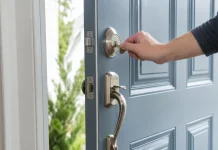
Check whether the key, thumb turn, handle, latch, and bolt move gently while the door is already open.
Stop when movement is rough, loose, disconnected, or incomplete.
Access
Decide whether people can enter and leave safely and whether the property can be secured.
Access and escape needs determine the urgency more than the hardware type.
What Safe First Checks Can You Perform?
These checks apply only when you have authorized access and can work without trapping anyone or leaving the property unsecured.
Stop Forcing the Key or Handle
Remove pressure as soon as the key bends, the handle flexes, or the mechanism grinds.
A broken key or damaged cylinder can make the repair more difficult.
Try a Known Spare Key
Use an undamaged key that is known to operate the same lock. Compare its movement gently.
If the spare works, retire the worn or damaged key rather than continuing to use it.
Test With the Door Open
Only test while open if the door is already accessible and will remain open safely.
A change between open and closed positions helps distinguish alignment from an internal lock issue.
Check Visible Hardware
Look for loose handles, exposed screws, rubbing marks, uneven gaps, and a latch that does not return.
Do not remove the cylinder, lock body, or exterior security hardware.
Follow the Supported Smart-Lock Process
Replace batteries or use the manufacturer’s recovery method when the instructions clearly support it.
Keep a mechanical access plan where the product and local requirements allow one.
Decide Where the Check Must End
Contact a locksmith when the property cannot secure, a person cannot exit, the mechanism remains unreliable, or safe access is unavailable.
Tell the locksmith the lock type, symptom, access status, and any products already used.
Locked Out of House: What Should You Do?
Being locked out creates an immediate access problem, but the safest response depends on whether anyone or anything inside is at immediate risk.
Use only legitimate, non-destructive options:
- Confirm that you are at the correct property and door
- Check whether an authorized household member has a key
- Contact the landlord, property manager, or building staff when applicable
- Use an approved smart-lock recovery method
- Call a verified locksmith and be ready to prove your right to enter
- Call emergency services only when an immediate danger exists
Do not attempt lock picking, carding, drilling, prying, roof access, window entry, or breaking glass. These actions can cause injury, property damage, insurance problems, or suspicion of unauthorized entry.
When Does a Lock or Access Problem Become an Emergency?
A lock or access issue becomes an emergency when someone cannot escape, an immediate hazard is inside, or the property cannot be made safe.
Use the full emergency home repair guide when:
- A child or vulnerable person is locked inside
- A fire, smoke alarm, medical need, or active cooking appliance is involved
- A person cannot unlock an exit from inside
- The main entrance cannot secure after damage or attempted entry
- A broken key or failed mechanism blocks the only practical exit
- A tenant cannot access essential medication or safety equipment
- The door or frame shows forced-entry damage
- The lock failure creates immediate personal danger
The U.S. Fire Administration advises households to plan two ways out and ensure doors and windows used for escape are not blocked. Review its home fire escape guidance.
Call emergency services when anyone faces immediate danger. A normal lockout without danger is usually a locksmith or property-management issue, not a fire or police emergency.
What Should You Avoid When the Door Lock Is Not Working?
Do not force a resistant key, wrench the handle, slam the door, or repeatedly operate a failing smart-lock motor.
Do not mix lubricants or spray an unknown household product into the cylinder.
Do not dismantle an exterior lock while the property depends on that door for security.
Do not close a door that may lock you in, lock you out, or block the only practical escape route.
Do not accept drilling as the automatic first step from an unknown locksmith. Ask what non-destructive options were considered.
Do not leave a broken exterior lock unsecured while waiting for a planned appointment.
Who Should Inspect or Repair the Problem?
Choose the first contact from the symptom, access status, and door type.
| Observed evidence | Likely first contact |
|---|---|
| Key, cylinder, latch, deadbolt, or lock mechanism fails | Qualified locksmith |
| Door sags, rubs, or no longer fits the frame | Door professional, carpenter, or locksmith depending on the cause |
| Smart lock has power, calibration, or supported software issues | Manufacturer support or qualified smart-lock installer |
| Handle or latch hardware is loose or disconnected | Locksmith or appropriate door-hardware professional |
| Moisture has swollen or damaged the door and frame | Relevant moisture professional plus door repair where required |
| Tenant is locked out or the rental cannot secure | Landlord or property manager and an authorized locksmith |
| Door or frame shows forced-entry or structural damage | Emergency services when danger remains, then locksmith and repair professional |
| A person cannot leave through the available exit | Emergency services if immediate safety is affected |
How Can You Avoid a Locksmith Scam?
Emergency access creates pressure, and dishonest operators may use a low initial quote before demanding a much higher payment.
The Connecticut Department of Consumer Protection warned in July 2026 about scammers posing as locksmith technicians, overcharging for unlocking and replacement work, and using bait-and-switch pricing. Read its locksmith-scam warning.
Ask for the business name, location, identification, proof of any locally required license, and an itemized estimate before work begins. Confirm call-out charges, labor, parts, after-hours rates, and what happens if drilling becomes necessary.
Be cautious when the vehicle, clothing, invoice, and business name do not match. Do not allow pressure for cash-only payment or work you did not approve.
What Affects the Cost of Lock Repair or Replacement?
The visible symptom does not show the complete repair scope. Cost depends on access, time, lock type, hardware grade, door condition, required parts, and whether emergency attendance is needed.
A worn key, loose handle, misaligned strike, failed mortise mechanism, damaged smart lock, and forced-entry repair involve different labor and materials.
A useful quotation should separate attendance, diagnosis, opening, repair, replacement, keys, security upgrades, and after-hours charges.
What Should Tenants and Landlords Record?
Clear information helps the access problem reach the correct priority and prevents confusion over what happened.
Tenants Should Report
Report the affected door, whether you are inside or outside, whether the property can secure, and whether anyone faces immediate danger.
Include the key or handle symptom, visible damage, safe photographs, access arrangements, and any product already used.
Do not authorize destructive work unless the person or agreement allows you to do so.
Landlords Should Record
Record the report time, urgency, occupancy, instructions, contractor, authorization, estimate, work completed, new keys, invoices, and follow-up.
Confirm who receives replacement keys and whether access records need updating.
Repair duties, access rights, and response requirements vary by location and lease terms.
How Can You Prevent Repeat Door Lock Problems?
Prevention focuses on early changes, suitable maintenance, controlled key management, and dependable escape routes.
Replace Worn Keys
Retire bent, cracked, or badly worn keys before they break. Use a reliable original when obtaining copies.
Do not keep using a key that needs repeated jiggling or pressure.
Respond to Alignment Changes
Investigate new rubbing, uneven gaps, loose hinges, and a door that needs lifting to lock.
Correcting the door condition can reduce strain on the latch and bolt.
Use the Correct Maintenance Product
Follow the lock manufacturer’s cleaning and lubrication instructions. More product is not automatically better.
A recurring stuck door lock still needs assessment.
Keep Authorized Backup Access
Maintain a controlled spare-key or supported smart-access plan with a trusted authorized person.
Do not hide keys in obvious outdoor locations or share access codes without control.
Protect Emergency Escape
Make sure occupants can operate required exits quickly. The CPSC advises that child-safety door devices should remain easy for an adult to open in an emergency. See its childproofing guidance.
Include doors and locks in the household fire-escape practice.
The Right Response Starts With Safe Access
Frequently Asked Questions
Why Is My Door Lock Not Working Suddenly?
Sudden failure may involve a damaged key, misalignment, internal wear, weather, swelling, loose hardware, or a smart-lock power issue. Stop forcing the mechanism.
Why Does the Key Turn When the Door Is Open but Not Closed?
This commonly points to pressure or misalignment between the door, latch or bolt, and frame. Arrange adjustment if gentle operation does not return.
What Should I Do When the Key Is Not Turning in the Lock?
Stop applying force, try a known spare key, and test only with the door already open. Contact a locksmith if resistance remains.
Why Won’t My Door Lock?
A door that will not lock may have a misaligned strike, sagging hinges, swelling, a damaged bolt, or internal mechanism failure.
Can I Fix a Stuck Door Lock With Oil?
Use only a product approved for the lock type. Unsuitable oil can attract dirt and may worsen the problem over time.
What Should I Do If I Am Locked Out of the House?
Contact an authorized key holder, landlord, property manager, supported smart-lock service, or verified locksmith. Avoid forced or improvised entry.
When Is a Broken Door Lock an Emergency?
It becomes an emergency when someone cannot escape, immediate danger is inside, or the property cannot be secured after damage.
Who Repairs a Door Handle That Is Not Working?
A locksmith or appropriate door-hardware professional can assess the handle, spindle, latch, and lock mechanism.
Should a Locksmith Drill the Lock?
Drilling may sometimes be necessary, but it should not be assumed automatically. Ask what non-destructive options were assessed and approve the cost first.
How Can I Prevent Another Lockout?
Maintain controlled spare access, replace worn keys, follow smart-lock battery guidance, and keep contact details for a verified locksmith or property manager.

