




















A clogged drain may begin with slow drainage, gurgling, recurring odors, or water rising in another fixture. Stop adding water when several drains are affected, sewage appears, or the lowest fixture starts backing up.
The first goal is not to force the blockage through. It is to identify the pattern, protect the area, and decide whether a safe household check is still appropriate.
Safety warning Keep people away from sewage, contaminated water, overflowing toilets, and wet electrical equipment. Do not plunge or dismantle a drain after using a chemical cleaner. Contact emergency services when anyone faces immediate danger.
Quick Summary
- One slow drain often suggests a restriction close to that fixture.
- Several affected fixtures may point to a branch, main drain, sewer, or septic problem.
- Stop using water when another fixture rises, bubbles, or begins to overflow.
- Remove only visible and safely accessible debris.
- Do not mix cleaners or continue DIY checks after sewage appears.
What Are the Earliest Warning Signs of a Clogged Drain?
A clogged drain rarely starts with a complete overflow. Early signs usually involve slower movement, trapped air, recurring residue, or a change in another fixture.
Water Drains More Slowly
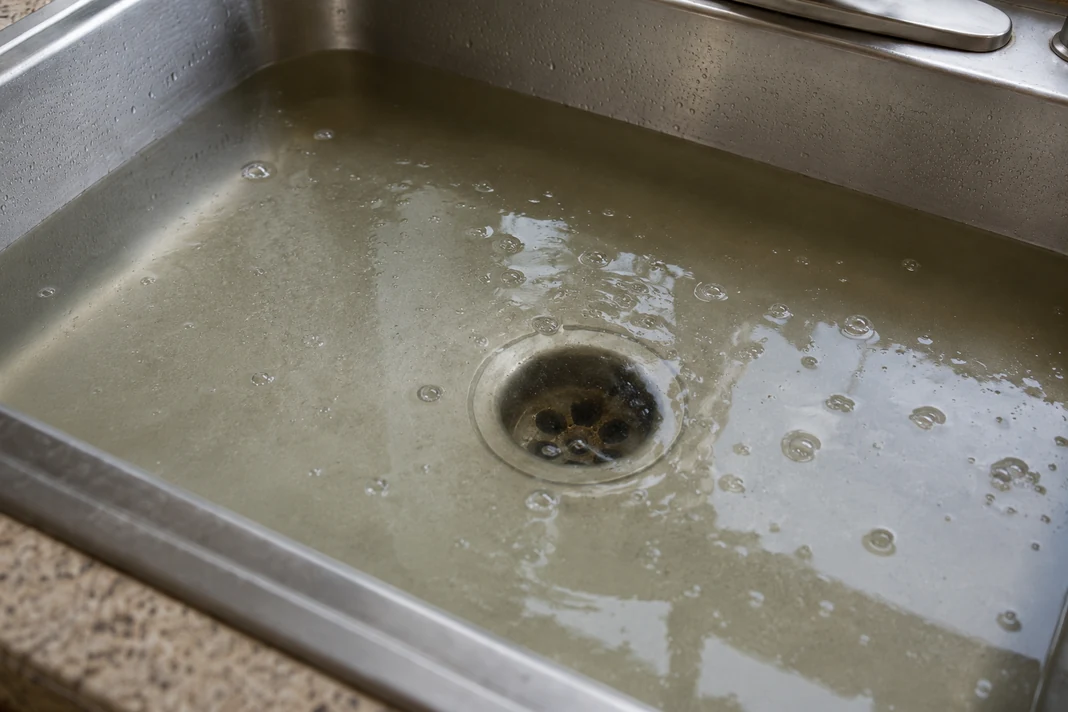
A slow drain may empty normally at first, then take longer each day. Water may collect around a shower outlet or remain in a sink after the tap stops.
Compare the affected fixture with nearby drains. One slow fixture suggests a local restriction more often than a property-wide problem.
Gurgling, Bubbling, and Air Movement
Gurgling can occur when water and trapped air struggle to move through the pipe. A nearby toilet may bubble when a sink, shower, or washing machine drains.
One brief sound does not confirm a blockage. Repeated noise across several fixtures deserves faster assessment.
Water Rises in Another Fixture
Water rising in a shower, bath, toilet, or floor drain after another fixture is used suggests a wider restriction. Stop the test immediately.
Do not keep flushing or running taps to identify the limit. Added water can turn a drain blockage into an overflow.
Odors and Recurring Residue
Food, grease, hair, soap, and organic residue can create unpleasant drain odors. A dry trap can also allow sewer gas into a room.
A strong sewage odor with slow drainage, gurgling, or backup requires more caution than odor alone.
The Problem Keeps Returning
A fixture that improves briefly and slows again may have a deeper restriction. Repeated problems can also indicate damaged pipework or a wider drainage fault.
Recurring symptoms are evidence that the cause has not been corrected.
Is One Clogged Drain Different From Several Clogged Drains?
The number and location of affected fixtures provide useful clues. They cannot confirm the exact cause, but they help determine whether a household check is reasonable.
| Observed pattern | What it may suggest | Sensible response |
|---|---|---|
| One bathroom sink drains slowly | Hair, soap, residue, or a local trap restriction | Stop if the basin fills; remove only visible debris |
| One shower drains slowly | Hair and soap buildup near the outlet | Clean the accessible strainer and monitor the next use |
| One toilet is blocked | Local toilet blockage or an unsuitable flushed item | Stop flushing and use a suitable toilet plunger only when safe |
| A toilet bubbles when a sink drains | Shared branch or wider drainage restriction | Stop adding water and arrange professional assessment |
| Several fixtures drain slowly | Branch, main drain, sewer lateral, or septic problem | Limit water use and contact the relevant professional |
| Water rises through the lowest drain | Active backup in a wider drainage route | Stop all water use and restrict access |
What Commonly Causes a Clogged Drain?
The material entering a drain, the pipe condition, and the affected location all influence the likely cause.
Hair, Soap, and Personal-Care Residue
Hair can bind with soap, skin oils, and product residue near bathroom outlets. The restriction may begin close to the stopper or extend farther into the trap.
Removing an accessible hair catcher can help. Do not reach into a drain where sharp objects or chemicals may be present.
Fats, Oils, Grease, and Food
Grease can cool and coat kitchen pipework. Food particles then collect on the narrowing surface and reduce the available opening.
The U.S. Environmental Protection Agency lists fats, oils, grease, wipes, and roots among materials or conditions that can create sewer blockages and overflows. See the EPA’s sanitary sewer overflow guidance.
Wipes, Paper, and Foreign Objects
Wet wipes, hygiene products, paper towels, toys, and other objects may lodge in toilet or drain pipework. Products labelled flushable can still contribute to a blockage.
Do not keep flushing to move the item. Additional water may cause the toilet or another low fixture to overflow.
Pipe Defects, Roots, and Ground Movement
Cracked, displaced, or collapsed pipework can trap paper and waste. Roots may enter through defects and continue collecting material.
Recurring drain cleaning may provide temporary relief without correcting the damaged section. Inspection may be needed when the same pattern returns.
Septic-System or External Sewer Problems
A septic-system problem may cause slow drainage, gurgling, sewage backup, odors, or wet ground near the drainfield. The Oregon Department of Environmental Quality lists these as possible signs of septic-system failure.
A public sewer problem may also affect more than one property. Ask whether neighbors have similar symptoms when this can be done without delaying urgent action.
What Can the Drain Location Tell You?
Location helps narrow the pattern. Water can still travel through shared pipework, so the visible fixture may not sit closest to the obstruction.
Kitchen Sink
A kitchen clog often involves grease, food residue, or disposal misuse. Both bowls may be affected when they share the same trap or branch.
Stop using the dishwasher if it discharges through the same blocked route.
Bathroom Sink, Shower, or Bath
Hair and soap commonly collect near bathroom outlets. A removable strainer may reveal visible debris without opening concealed pipework.
Several slow bathroom fixtures can indicate that the restriction sits beyond one trap.
Toilet
A toilet clog may involve excess paper or an unsuitable item. Rising water means flushing must stop immediately.
Do not use a sink plunger on a toilet. Do not reach into contaminated water without suitable protection.
Laundry and Floor Drains
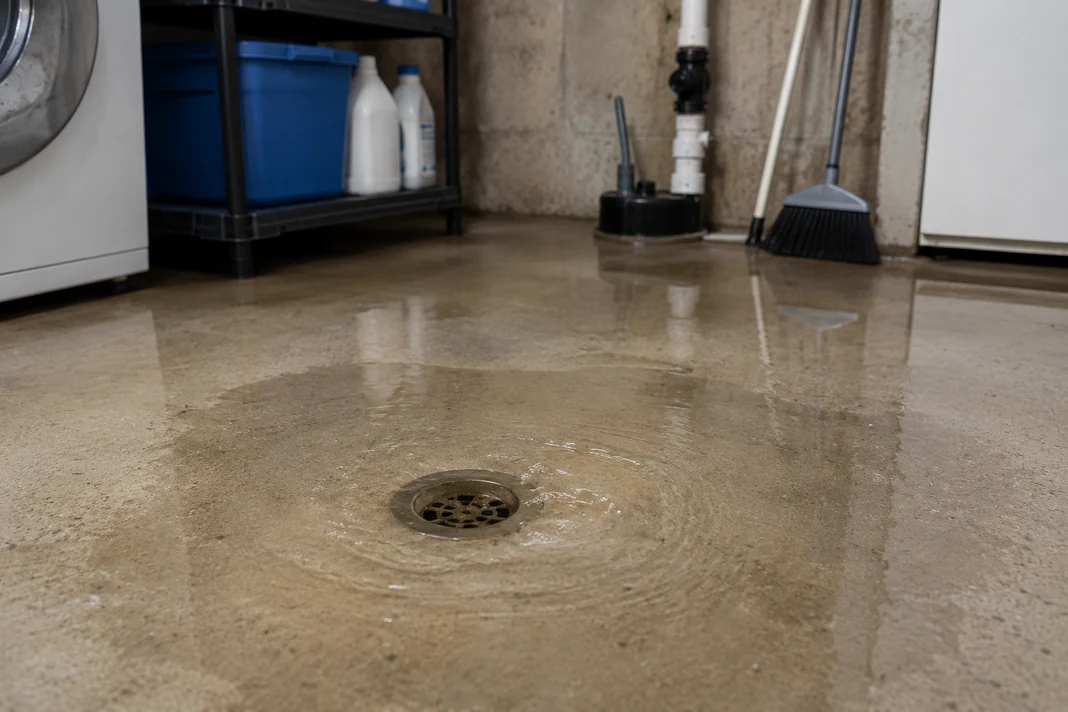
Water appearing at a floor drain during laundry can indicate a wider branch or main drain restriction. The large discharge volume exposes the limited route.
Stop the appliance if backup begins. Keep electrical cords and equipment away from contaminated water.
Several Rooms or the Whole Property
Multiple slow drains, repeated gurgling, and sewage odors across the property suggest a wider issue. Limit water use until the cause is assessed.
This is no longer a simple one-fixture DIY problem.
How Does the APC Pattern–Spread–Sanitation Test Work?
The APC Pattern–Spread–Sanitation Test helps organize the evidence without claiming to diagnose concealed pipework.
Pattern
Identify which fixtures are affected and what happens before the symptom appears.
Record whether the problem follows flushing, showering, dishwashing, laundry, or heavy water use.
Spread
Check whether the symptom remains at one fixture or appears elsewhere.
Water rising in another fixture moves the problem into a wider and more urgent category.
Sanitation
Stop household checks when sewage, contaminated water, chemical cleaner, or unsafe access is involved.
Sanitation risk determines whether anyone should remain near the affected area.
How To Unclog a Drain Safely
People searching how to unclog a drain often need a fast answer. A safe response begins by deciding whether the problem is limited to one accessible fixture.
Do not attempt these checks when several drains are affected, sewage is present, chemicals have already been used, or water is near electricity.
Stop Adding Water
Turn off the tap, shower, appliance, or flushing action that makes the level rise.
Allow standing water to settle before approaching the fixture.
Check One Fixture or Several
Observe nearby fixtures without repeatedly running them. Note any gurgling, bubbling, rising water, or sewage odor.
Stop if another fixture responds.
Remove Visible Debris
Remove accessible hair or residue from a strainer or stopper when the water is clean and no chemical cleaner is present.
Wear suitable gloves. Do not place hands into concealed pipework or around sharp objects.
Use the Correct Plunger Only When Safe
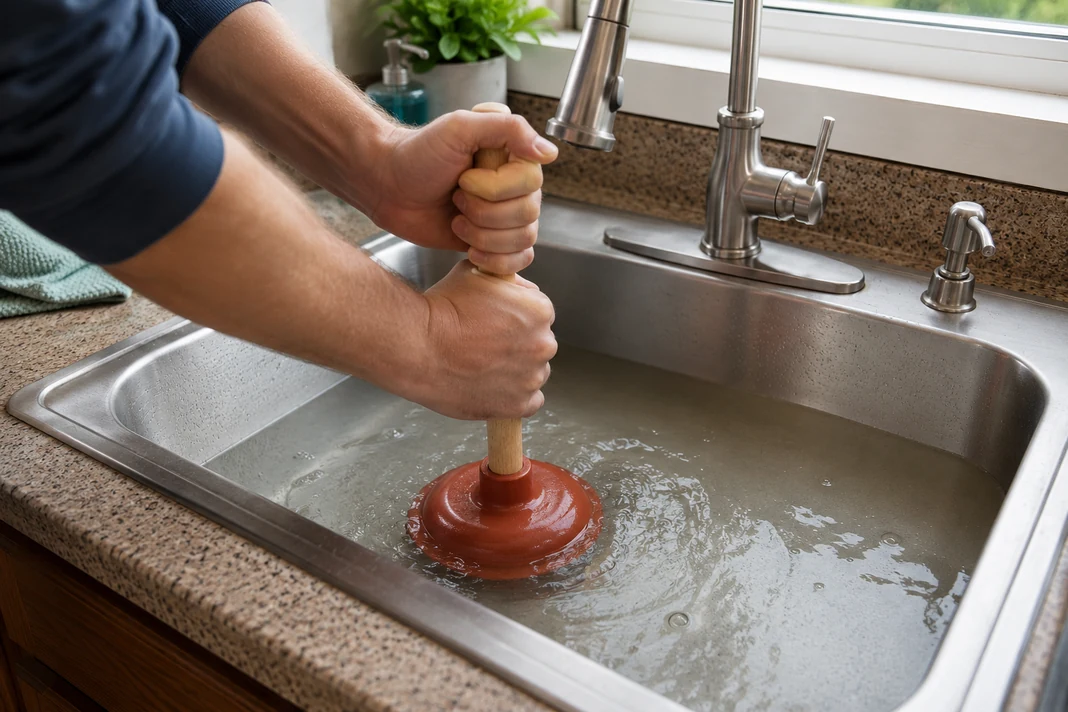
A suitable plunger may help a simple fixture clog. Follow the tool instructions and keep splashing controlled.
Do not plunge after adding drain cleaner. Pressure can force corrosive liquid back toward your face or skin.
Retest Once With a Small Amount of Water
Use a small amount of water only after the level has cleared and the area remains safe.
Stop if drainage remains slow, the level rises, or another fixture reacts.
Decide Where the Safe Check Ends
Arrange professional help when the clog returns, several fixtures are involved, or the cause is inaccessible.
Tell the professional what entered the drain and whether any chemical product was used.
Should You Use Chemical Drain Cleaner?
Chemical drain cleaners can contain concentrated corrosive ingredients. Poison Control warns that non-enzymatic products can cause serious burns and permanent tissue damage. Read its drain-cleaner safety guidance.
Never mix drain cleaner with bleach, ammonia, acid, another drain product, or an unknown cleaner.
Do not plunge, dismantle the trap, or use mechanical equipment after a chemical product has entered the drain.
Keep the container and product name available. Tell the plumber exactly what was used and when.
Seek Poison Control or emergency medical guidance after exposure. Follow the product label and local disposal requirements.
When Is Professional Drain Cleaning Needed?
Professional drain cleaning becomes appropriate when the restriction cannot be reached safely or keeps returning after a limited household check.
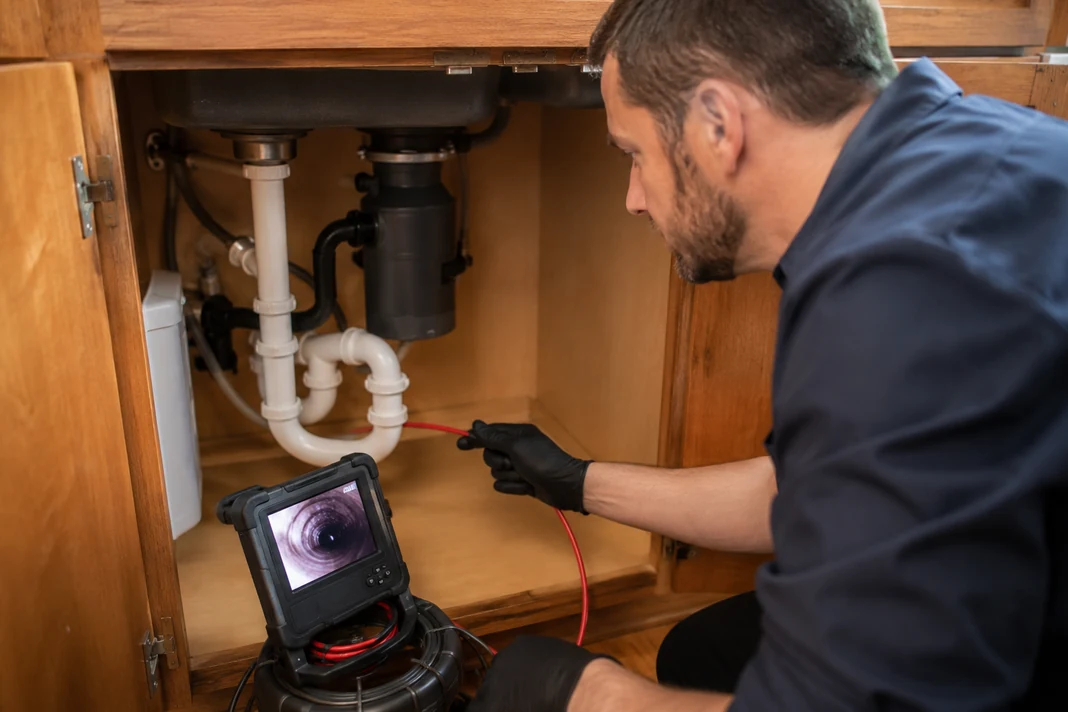
A plumber or drainage professional may recommend mechanical clearing, camera inspection, targeted repair, or another method. The correct approach depends on the pipe material, access, cause, and location.
Arrange assessment when:
- Several drains are slow or blocked
- The lowest fixture backs up
- A toilet bubbles when another fixture drains
- The clog returns soon after clearing
- Roots or damaged pipework are suspected
- Sewage odor accompanies drainage changes
- A septic system shows wider warning signs
- A chemical cleaner has already been used
Do not select a service by price alone. Ask what the quotation includes and whether diagnosis, clearing, inspection, cleanup, and follow-up are separate.
When Does a Clogged Drain Become an Emergency?
A clogged drain becomes an emergency when contaminated water spreads, safe sanitation fails, or the backup threatens people, electricity, or essential access.
Use the full emergency home repair guide when:
- Sewage enters an occupied room
- Water reaches sockets, appliances, or wiring
- Several fixtures overflow together
- The only usable toilet is unavailable
- A vulnerable occupant cannot remain safely
- The backup cannot be stopped by ending water use
- Contaminated water reaches food areas
- Ceilings or lower rooms are affected
- Safe entry or exit becomes difficult
Restrict access and keep children and pets away. Contact emergency services when anyone faces immediate danger.
After the drainage source is corrected, check nearby finishes for water spread. The damp and moisture warning signs guide explains what to monitor before cosmetic repair.
What Should You Avoid When a Drain Is Blocked?
Do not keep flushing, running taps, or operating appliances to test how severe the blockage is.
Do not mix household chemicals or add another product when the first one fails.
Do not use boiling water where splashing or material damage may occur.
Do not open concealed pipework when sewage, sharp objects, or chemical cleaner may be present.
Do not use pressure equipment, powered snakes, or improvised tools without the required training.
Do not cover odors with fragrance while drainage symptoms continue.
Who Should Inspect or Repair a Drainage Problem?
Choose the first contact from the pattern and the property’s wastewater system.
| Observed evidence | Likely first contact |
|---|---|
| One sink, bath, or shower remains blocked | Qualified plumber |
| Several fixtures or the lowest drain backs up | Plumber or drainage professional |
| Roots, pipe defects, or repeated main-line problems are suspected | Drainage professional with inspection capability |
| Septic alarms, wet drainfield, odors, or sewage backup appear | Licensed septic-system professional |
| Neighbors have the same sudden backup | Local wastewater utility, followed by a plumber when required |
| Contaminated water has spread through rooms | Drainage professional and qualified restoration contractor |
| Water has reached electrical equipment | Qualified electrician after the area is made safe |
| A tenant reports lost sanitation or active sewage | Landlord or property manager and the relevant emergency contractor |
What Affects the Cost of Drain Cleaning and Repair?
The visible fixture does not show the complete scope. Cost depends on access, blockage depth, pipe condition, contamination, equipment, and whether repair is required.
A local clog near a removable trap differs from roots inside a buried sewer lateral. Camera inspection, excavation, restoration, and after-hours response may be separate charges.
Ask whether the quotation covers diagnosis, clearing, testing, cleanup, and follow-up. Confirm what happens if the first method does not restore normal flow.
What Should Tenants and Landlords Record?
Clear evidence helps the problem reach the correct priority and professional.
Tenants Should Report
Report the affected fixtures, start time, water level, odor, gurgling, and whether another drain reacts.
Include any lost toilet or washing facilities, visible sewage, safe photographs, and products already used.
Stop using the affected fixtures when continued use causes backup.
Landlords Should Record
Record the report time, sanitation risk, instructions, access, contractor response, findings, cleanup, invoices, and follow-up.
Do not assume misuse before the cause is assessed. Pipe condition, roots, shared drainage, and building defects may also contribute.
Repair duties and response requirements vary by location and lease terms.
How Can You Prevent Repeat Drain Blockages?
Prevention depends on keeping unsuitable material out and responding before a slow drain becomes a full backup.
Keep Grease and Food Out of Kitchen Drains
Allow grease to cool and place it in a suitable waste container. Use strainers to catch food particles.
Do not rely on hot water to carry grease safely through the system.
Use Hair Catchers in Wet Areas
Clean accessible strainers before residue compacts beneath them. Replace damaged or poorly fitting covers.
A catcher reduces debris but does not repair a damaged or poorly graded pipe.
Flush Only Human Waste and Toilet Paper
Keep wipes, hygiene products, paper towels, dental floss, and litter out of toilets.
Place household waste in the correct container instead of testing whether it will flush.
Respond to a Slow Drain Early
Record which fixture is affected and whether the pattern returns. Early assessment may limit backup and water damage.
Repeated clearing without diagnosis can hide a deeper defect.
Protect Septic and Shared Systems
Avoid sending grease, wipes, chemicals, and unsuitable solids into the wastewater system.
Follow the inspection and pumping schedule recommended for the property’s septic system and local conditions.
The Right Response Starts With the Drain Pattern
Frequently Asked Questions
Can a Slow Drain Clear Itself?
A temporary change may occur, but recurring slow drainage usually means material or a defect remains. Monitor the next use and arrange assessment if the problem returns.
How Can I Unclog a Drain Without Chemicals?
For one clean and accessible fixture, remove visible debris or use a suitable plunger. Stop if another fixture reacts, sewage appears, or the level rises.
Why Are Multiple Drains Clogged at the Same Time?
Several affected drains may indicate a shared branch, main drain, sewer lateral, or septic problem. Limit water use and contact the relevant professional.
Can I Plunge a Drain After Using Drain Cleaner?
No. Plunging may splash corrosive liquid. Stop using the fixture, keep the product container, and tell the plumber what was added.
Why Does a Drain Gurgle?
Gurgling may occur when water and air struggle through restricted pipework. Repeated sounds across several fixtures can indicate a wider drainage problem.
When Is a Drain Blockage an Emergency?
Treat sewage spread, water near electricity, several overflowing fixtures, lost sanitation, or unsafe access as emergency warning signs.
Should I Pour Boiling Water Into a Blocked Drain?
Avoid boiling water where splashing or material damage may occur. It also will not correct roots, damaged pipework, or a solid foreign object.
Who Clears a Main Drain Blockage?
A qualified plumber or drainage professional should assess a suspected main-line problem. The local wastewater utility may need contact when several properties are affected.
What Should a Tenant Report About a Clogged Drain?
Report the fixtures involved, water level, odor, sounds, start time, spread, sanitation loss, photographs, and any products already used.
How Can I Prevent Another Clogged Drain?
Keep grease, wipes, hair, food, and unsuitable objects out of drains. Respond early when drainage slows or the same fixture repeatedly blocks.

